Personal Belongings
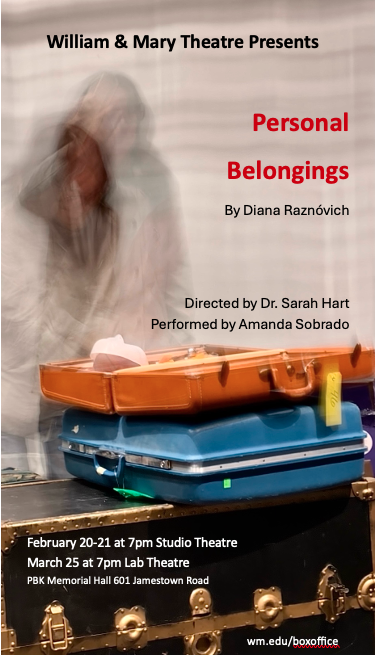
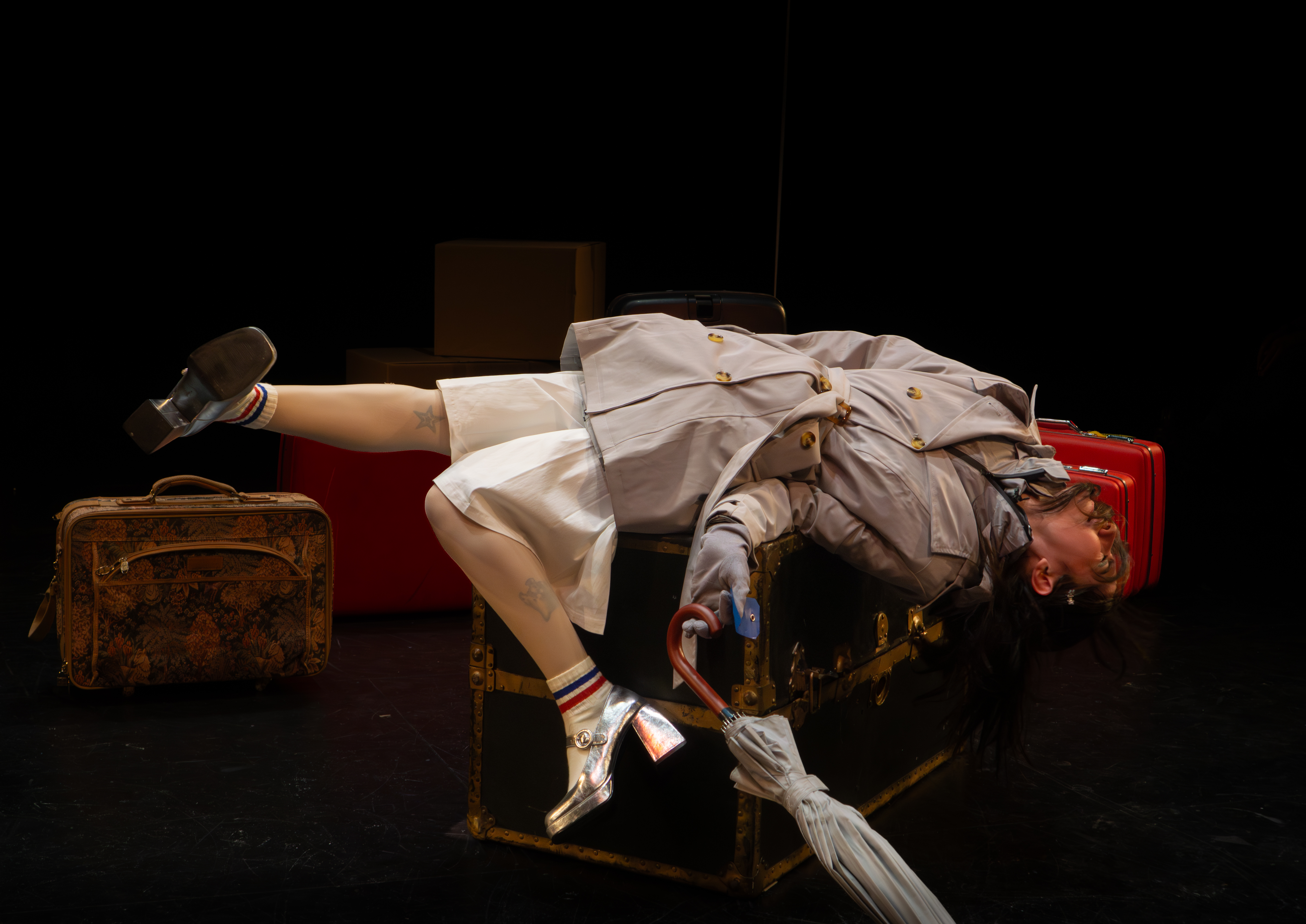
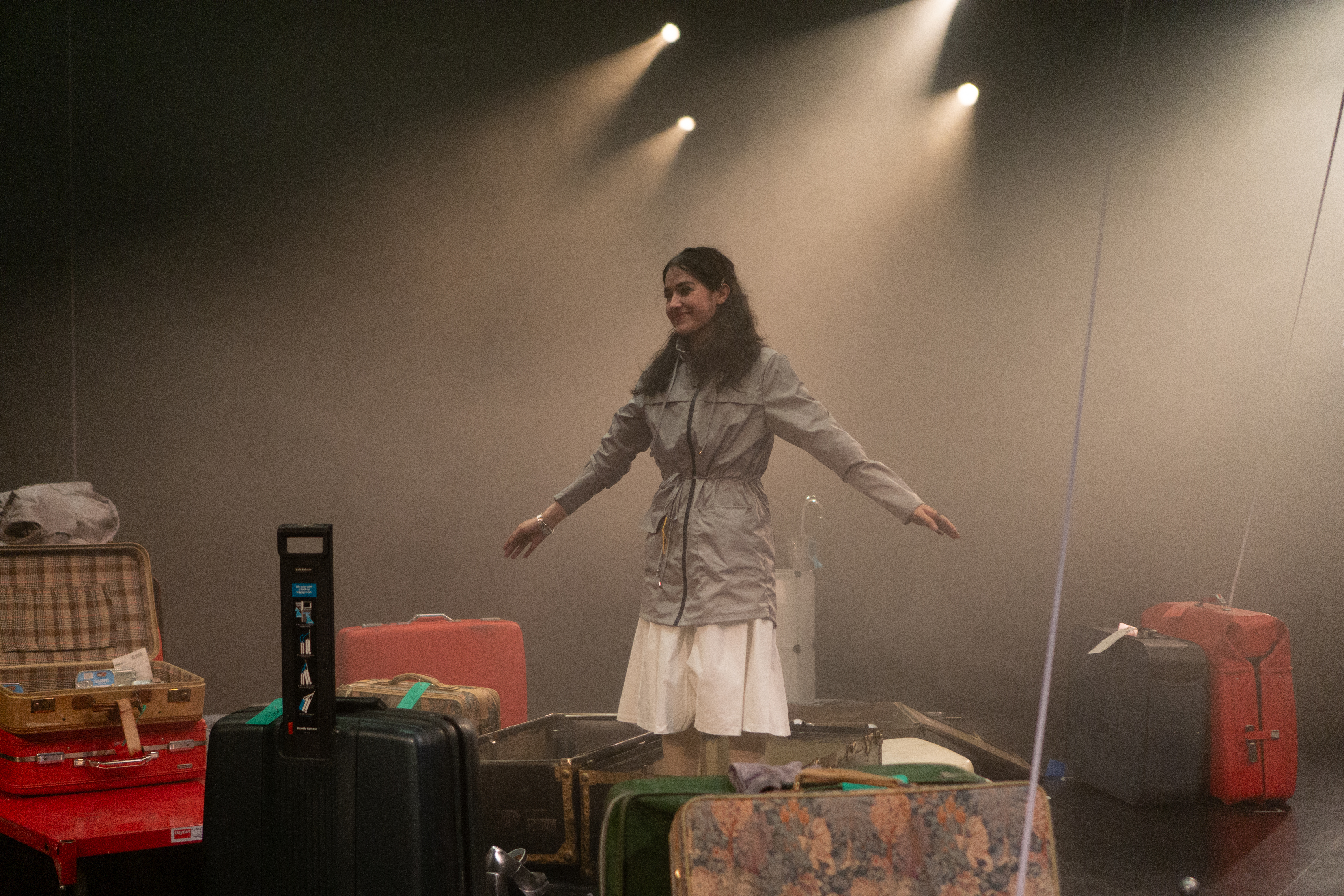
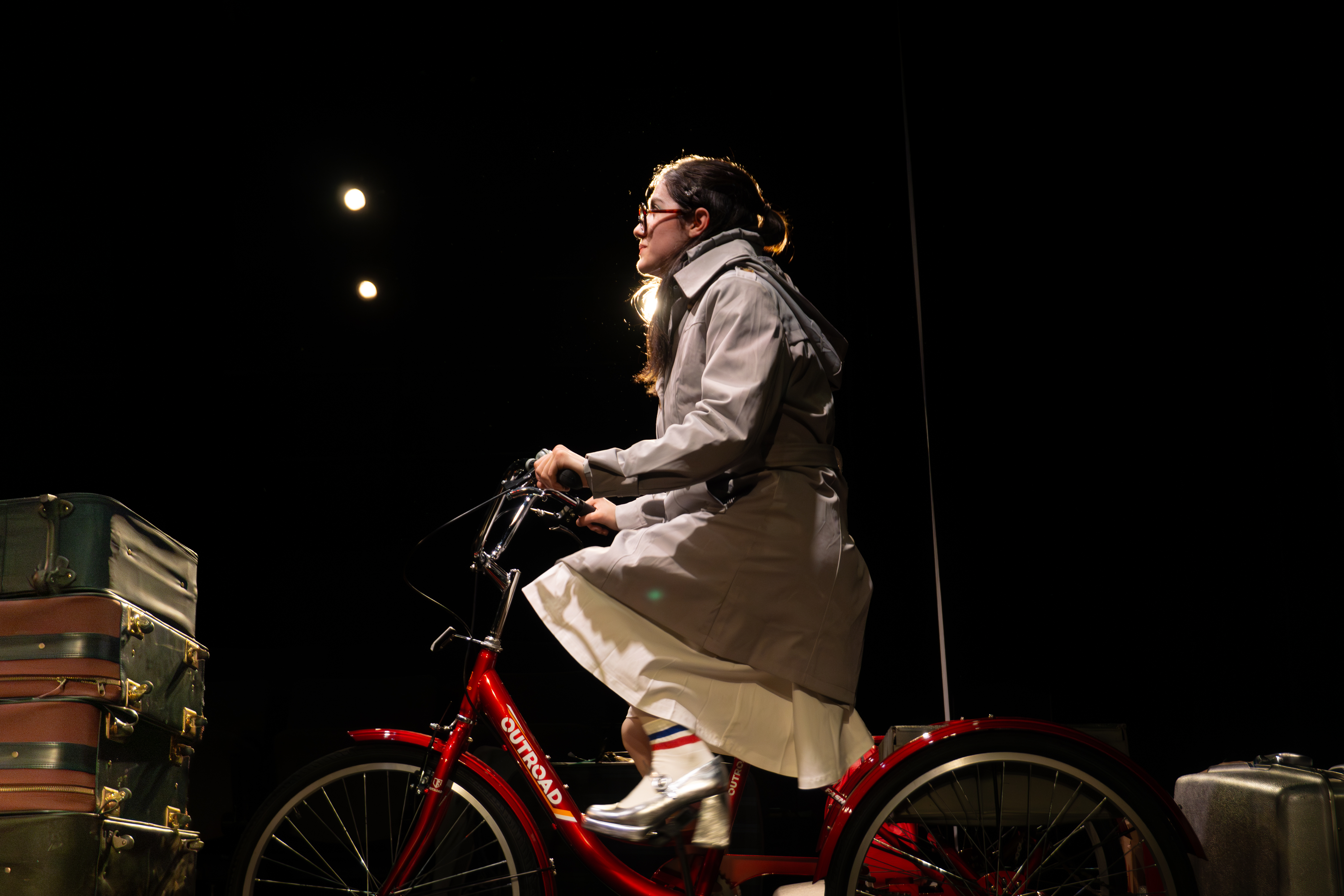
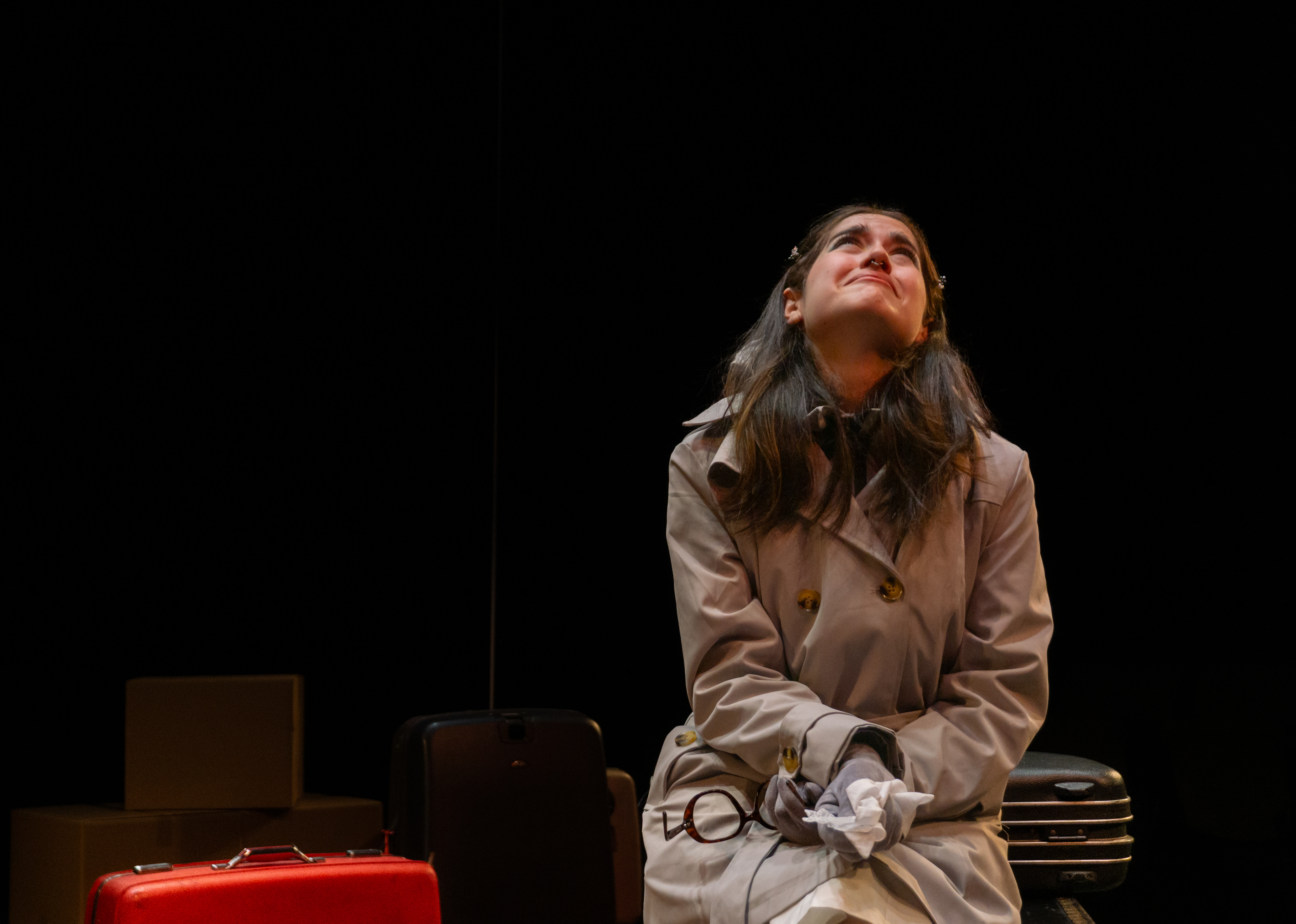
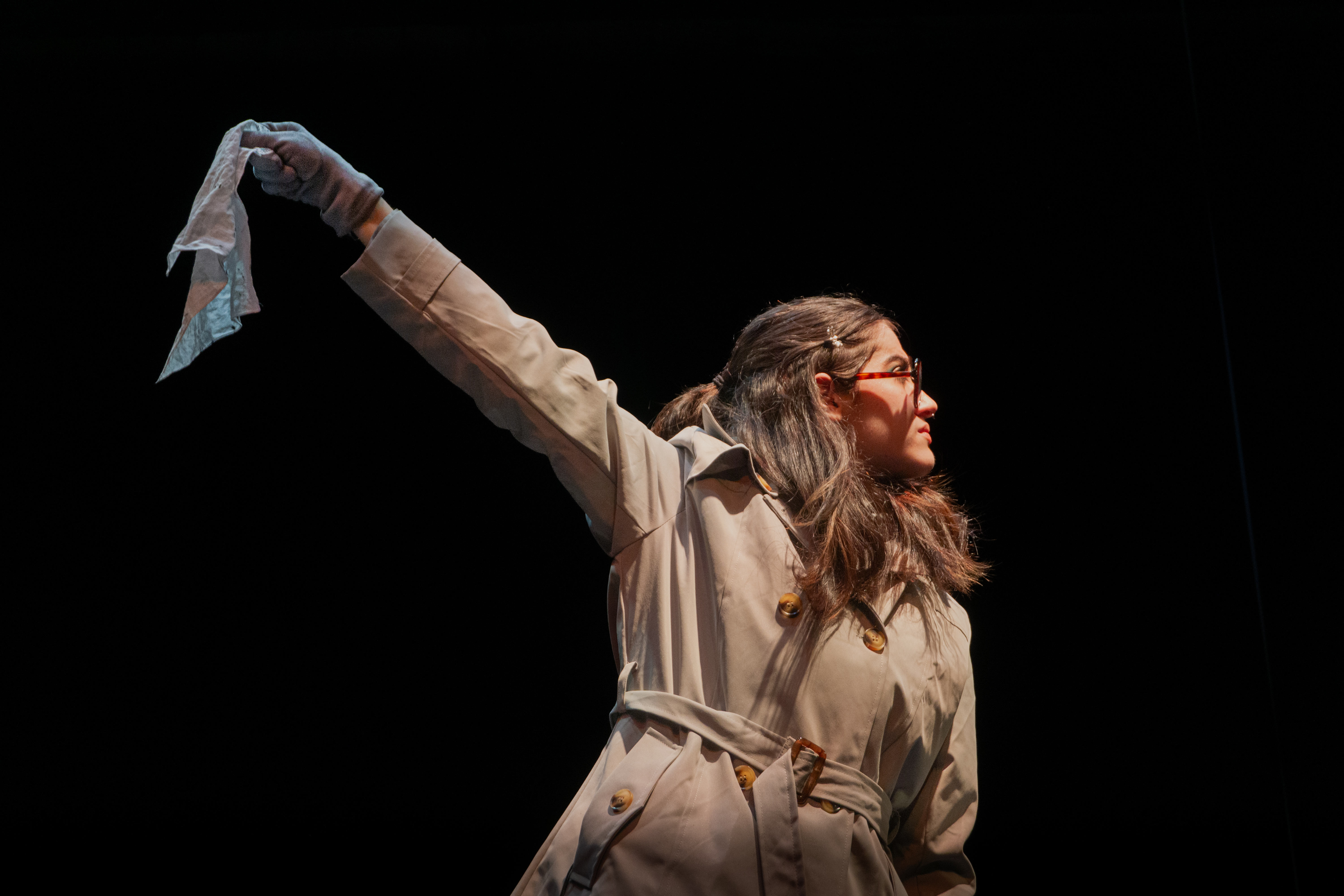
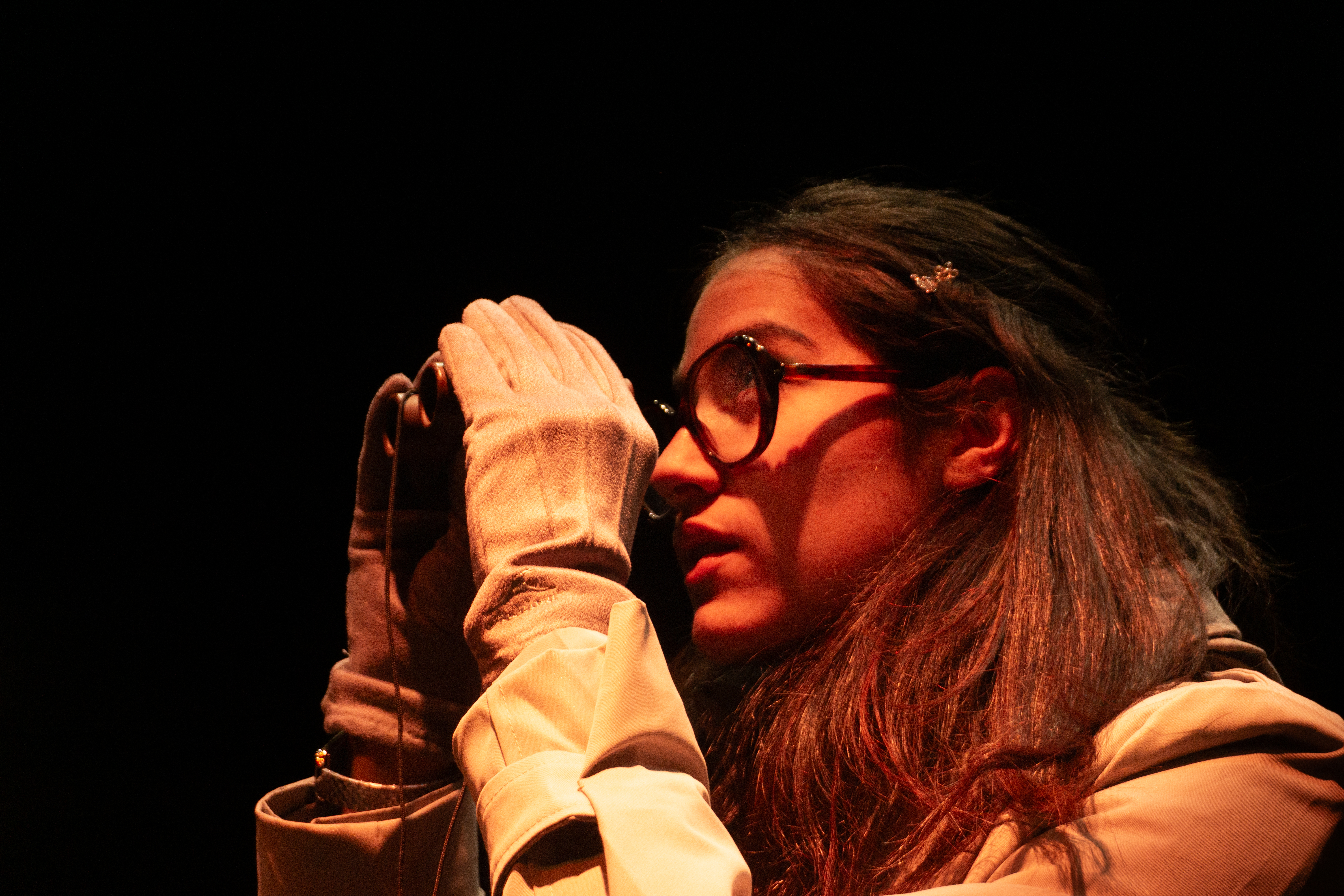
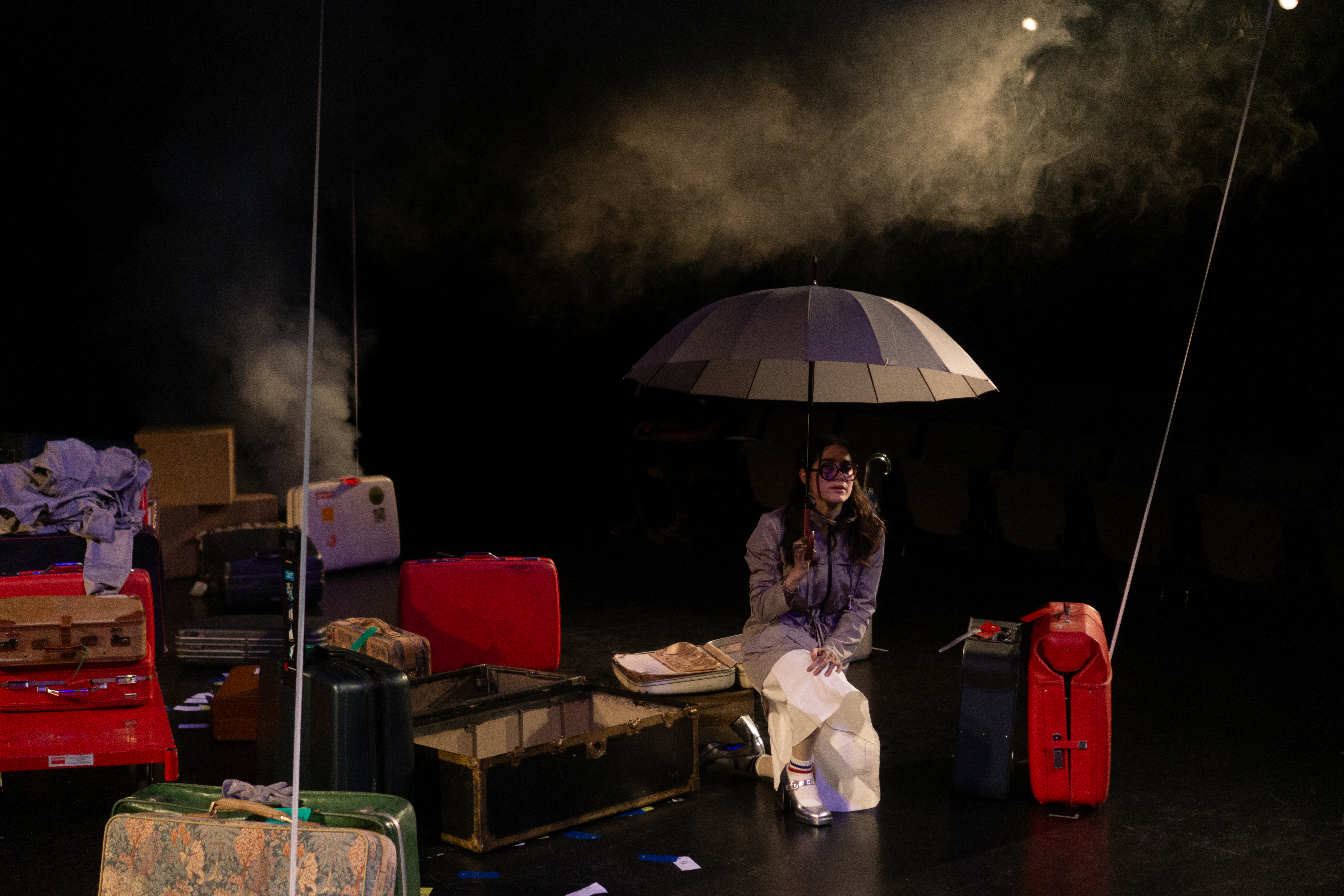
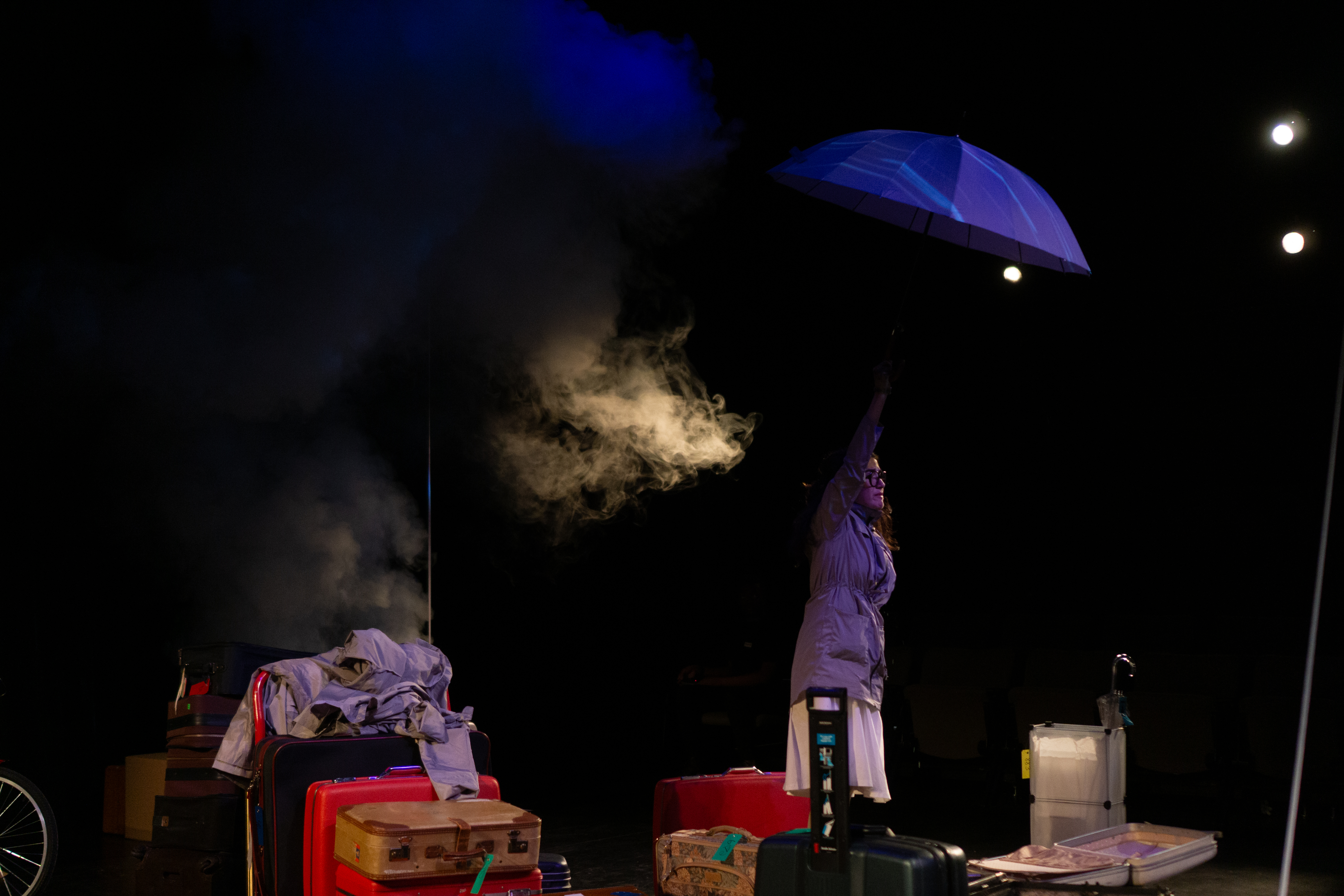
I directed a university production Personal Belongings at William & Mary’s Department of Theatre & Performance in Spring 2026. This rarely produced one-act monologue by Argentine feminist playwright Diana Raznóvich was written in 1975, anticipating the military coup that would install a dictatorship, which waged a “dirty war” on its citizens (1976-1983), supported by the US. The play is a satire on political detention and exile, taking audiences through a whirlwind of tragic, absurd events, as a “Diva” loses her sense of place and self. Seemingly on her own, she searches for her belongings among piles of suitcases in a baggage claim, where she remains trapped.
With her comedic dramatic works, Raznóvich creatively resisted repression at a time when censorship was the norm. This production was an opportunity to honor Latin American voices at William & Mary. We chose to produce this play bilingually, in both English and Spanish, to reflect an in-between space inhabited by first and second generation immigrants – between cultures, languages, worlds, and perspectives. The eight students involved in the production all contributed their skills and interests, inquiries and concerns, while learning about the historical context of the play. We explored theatre as a form of social justice and symbolic reparation, based in principles of community and solidarity.
Our production in February included a panel and talkback with invited speakers on Theatre, Memory and Human Rights in Argentina, including: Dr. Brenda Werth (Associate Professor and Department Chair, World Languages & Cultures, American University), Dr. Silvia Tandeciarz (Vice-Dean for Social Sciences & Interdisciplinary Studies, Chancellor Professor of Hispanic Studies, William & Mary), Dr. Karina Vázquez (Senior Teaching Faculty of Latin American, Latino and Iberian Studies, Director of Community-Based Learning, University of Richmond), and Dr. Matias Oviedo (Visiting Assistant Teaching Professor of Hispanic Studies, William & Mary). In March, we performed again as part of the Declassification Diplomacy: Argentina, the United States, and the Afterlives of 1976 colloquium at William & Mary. This project benefited from William & Mary Charles Center Community of Scholars Grant, a Reeves Center On-Campus Conferences Fund and a College of Arts & Sciences Annual Fund in 2025.
Creative Team:
Director: Dr. Sarah Hart
Performer: Amanda Sobrado
Production Designer: Prof. Mark Williams
Stage Manager: Kathleen Khorn
Assistant Director: Scarlett Mercier
Dramaturg: Sara Kaufman
Costume, Hair and Makeup Designer: Mayah Tiwari
Properties Manager: Jaden Grant
Lighting Designer: Ash Kelley
Sound Designer: Matthew Squadrito
Publicity:
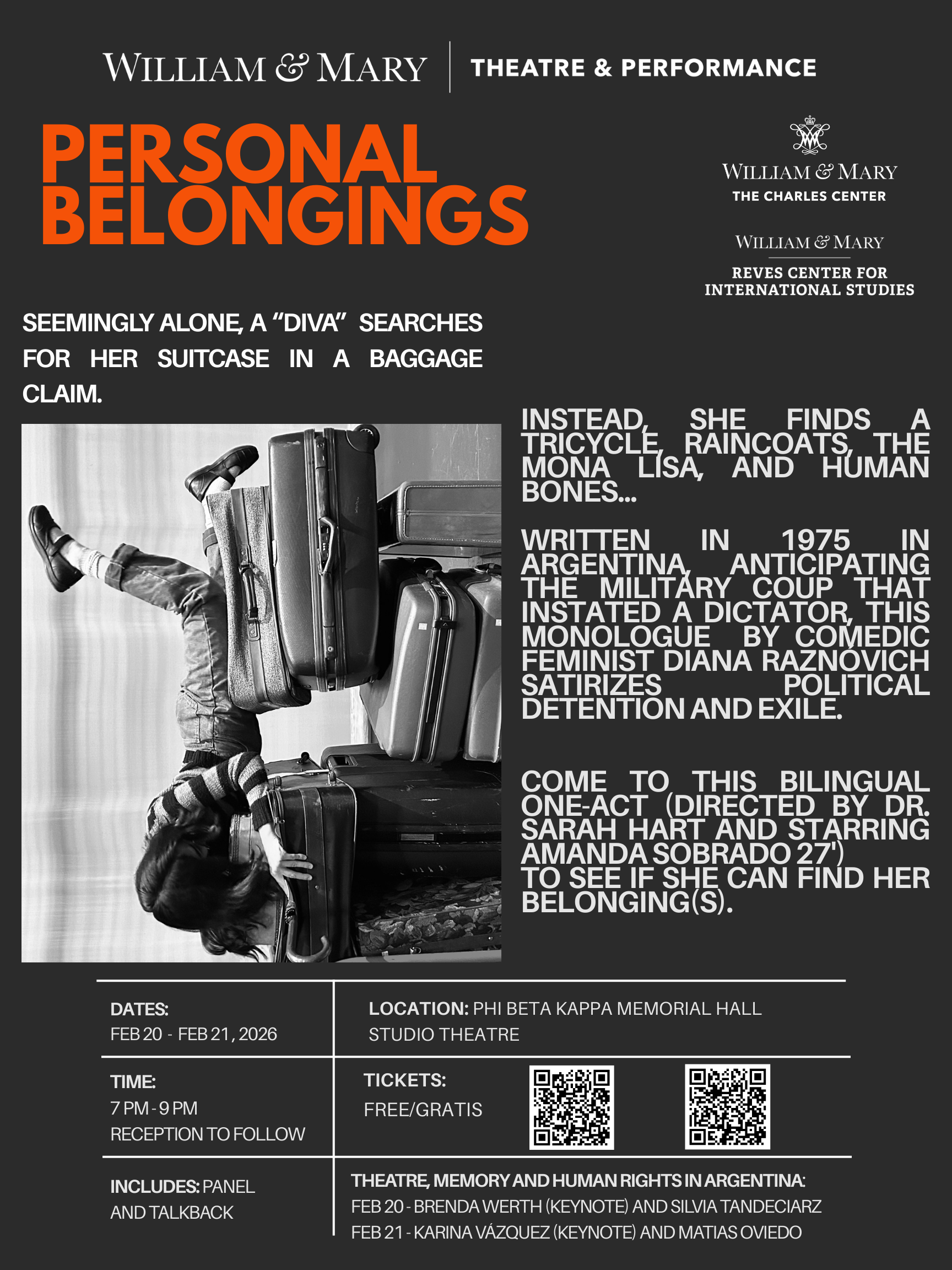
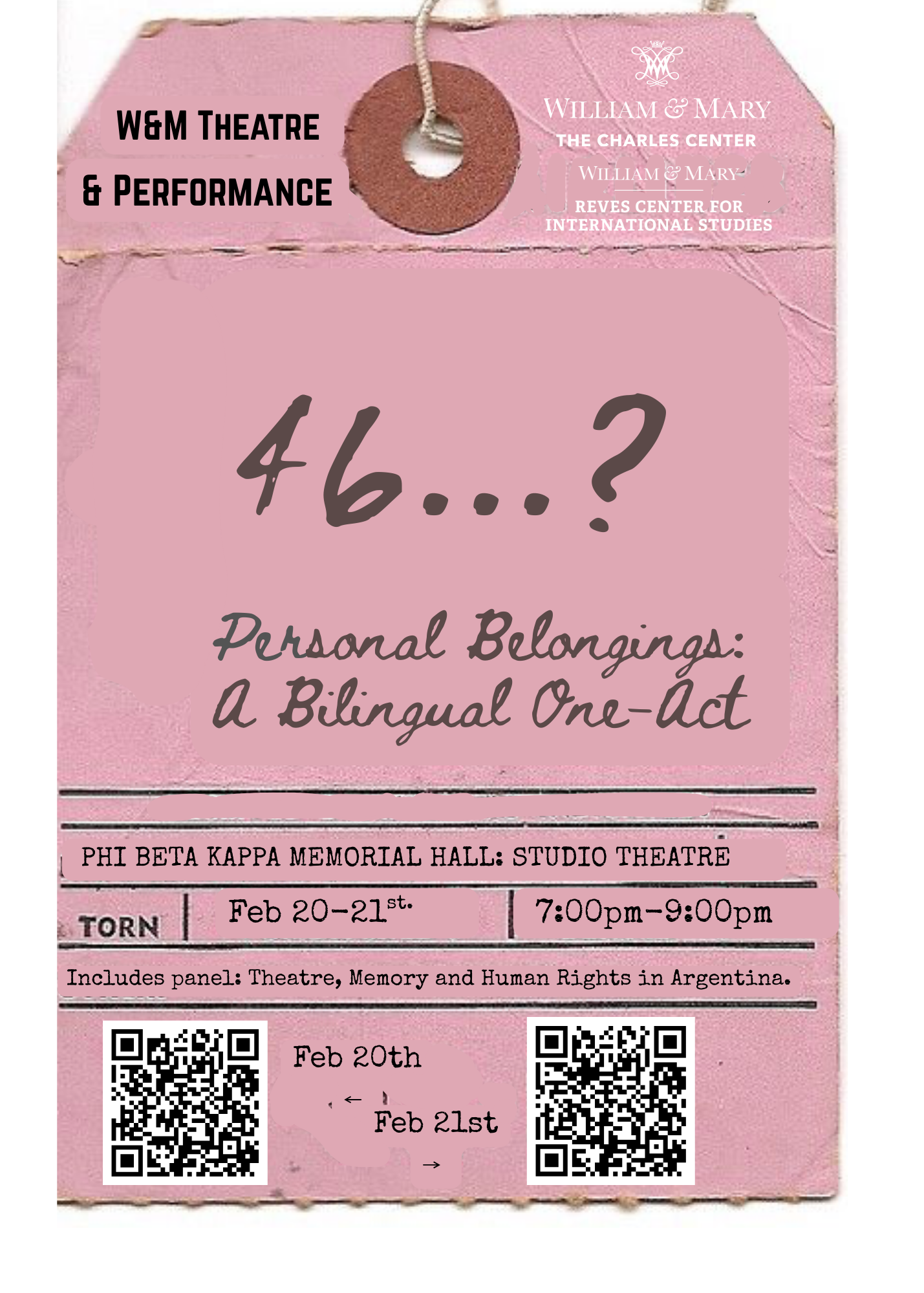
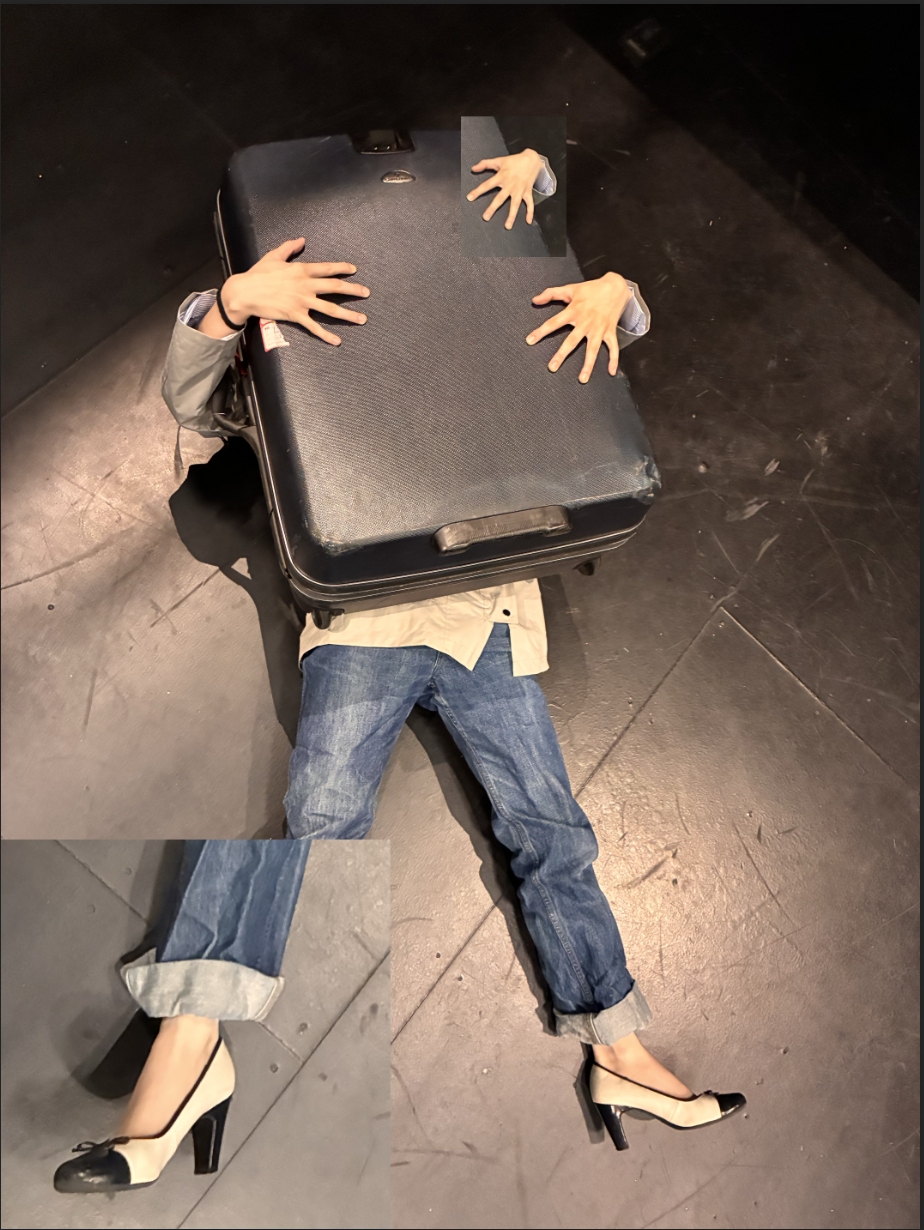
Publicity photos by Scarlett Mercier. Publicity design by Amanda Sobrado and Sarah Hart.
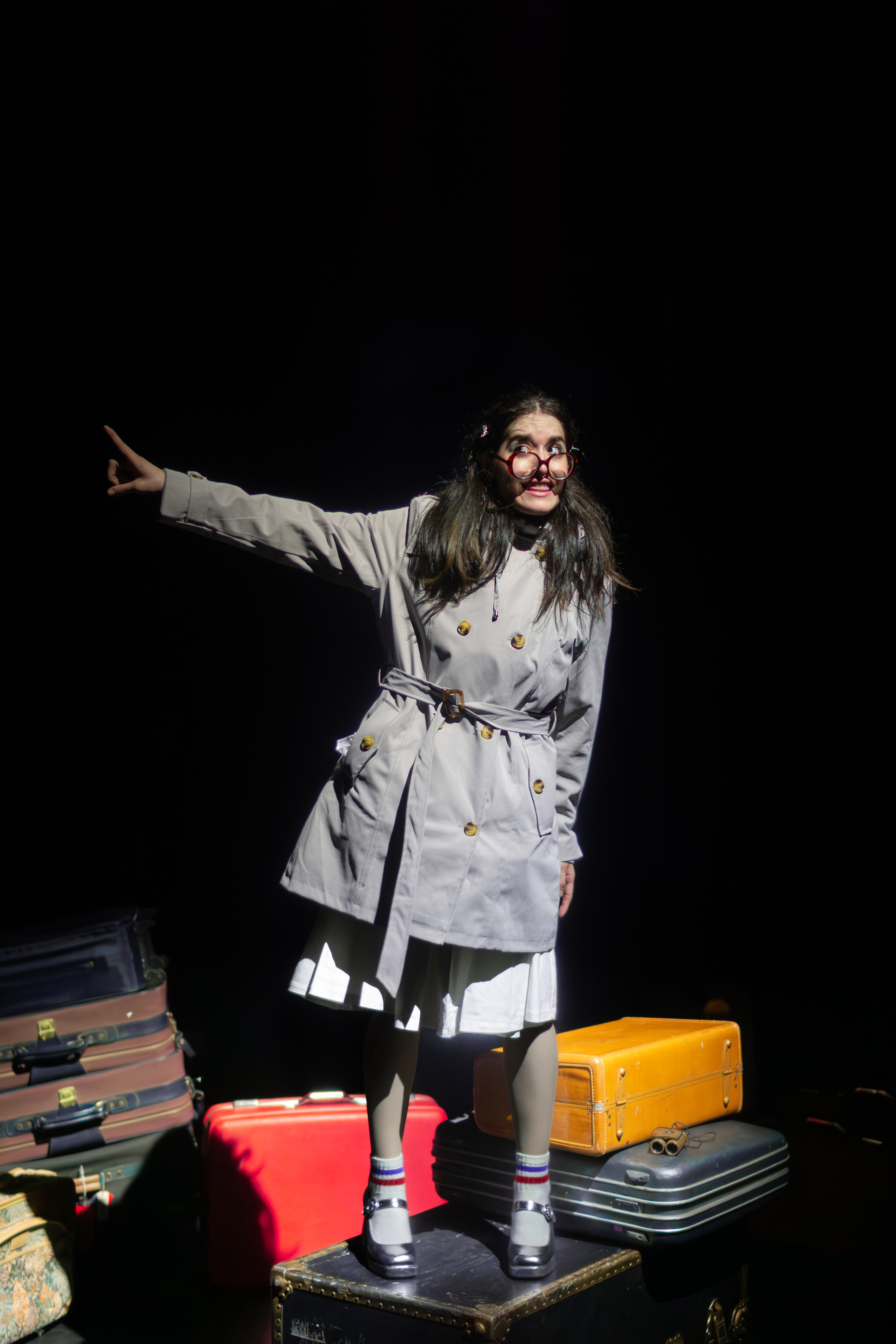
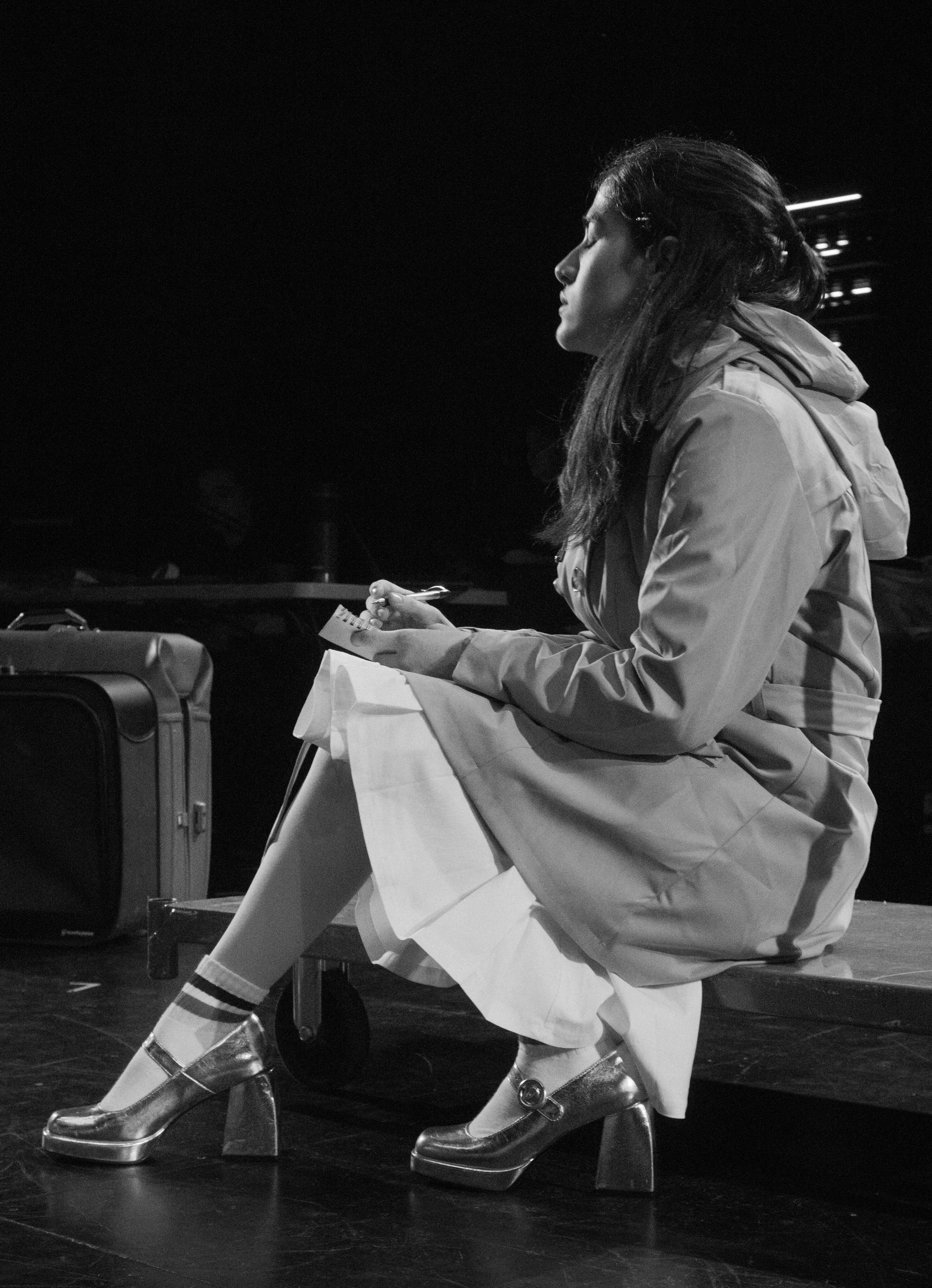
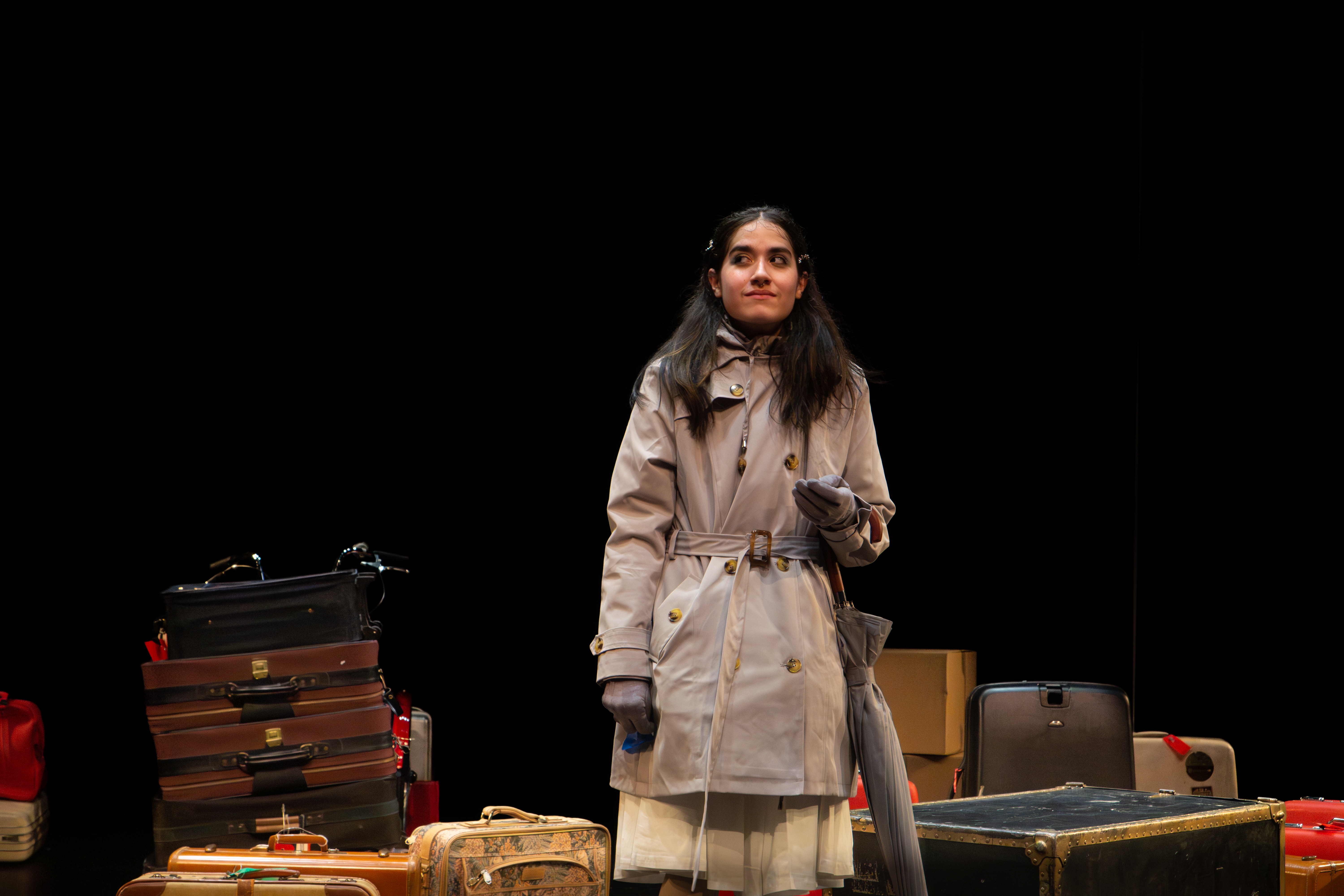
Production Photos (by Conor Farah):
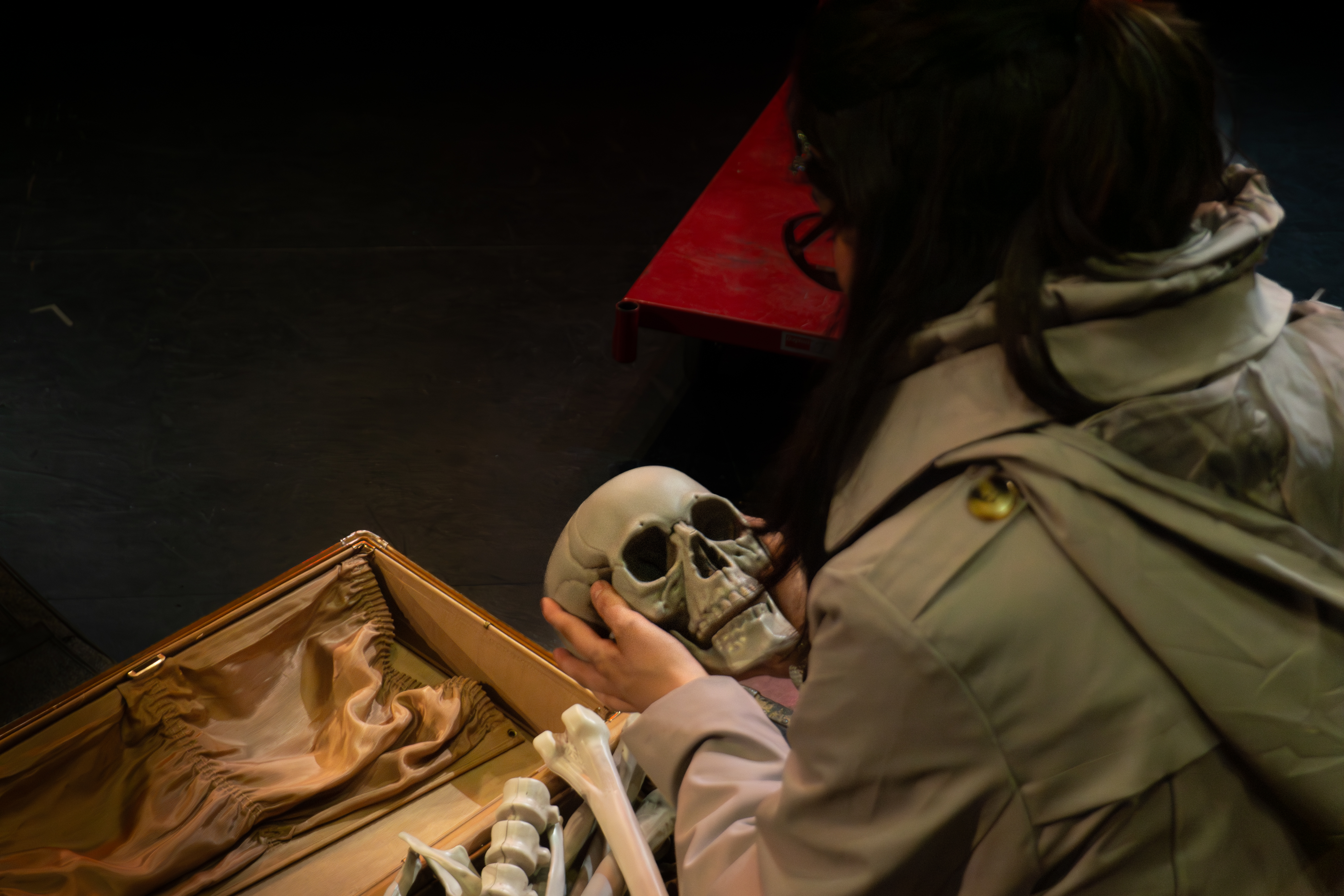
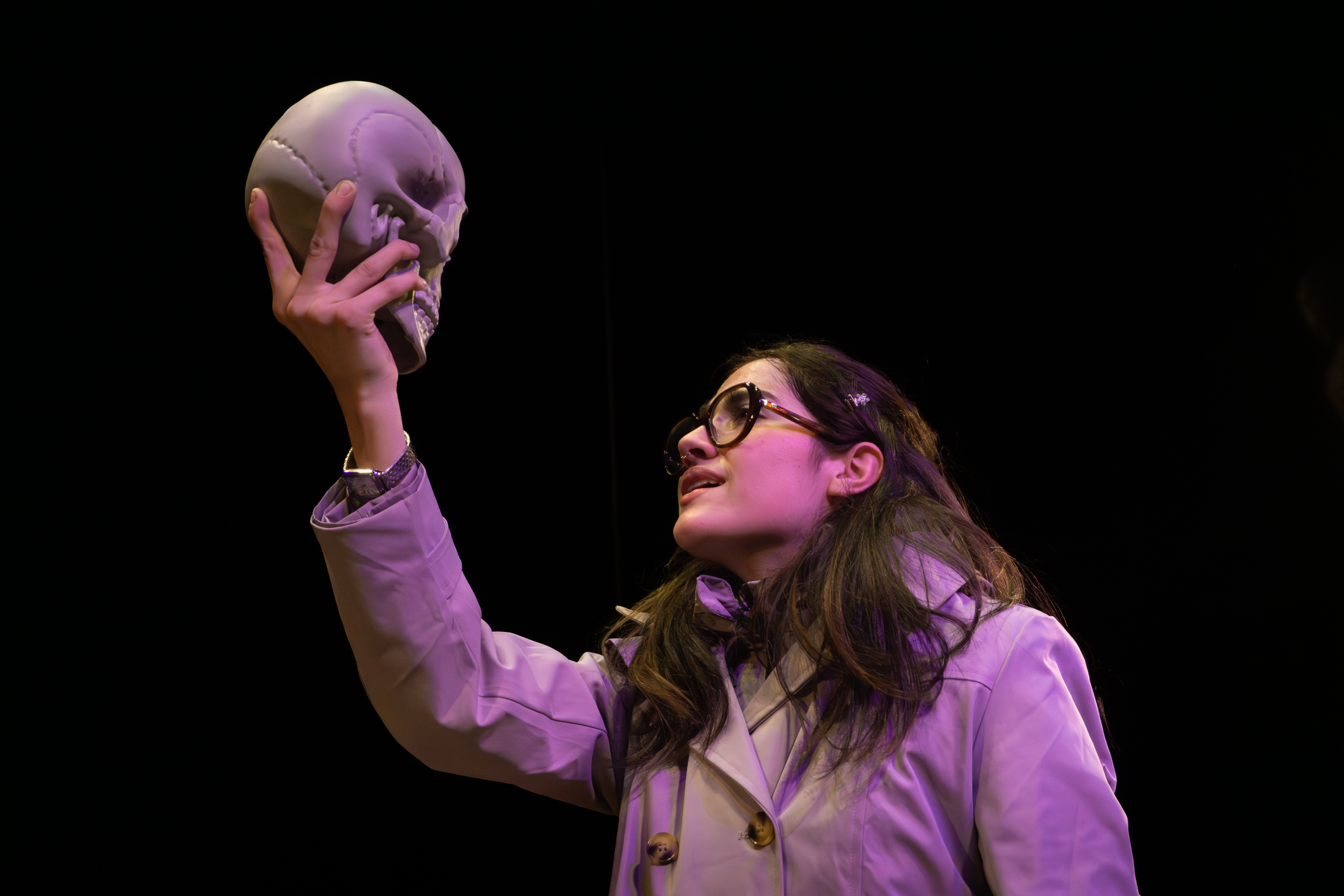
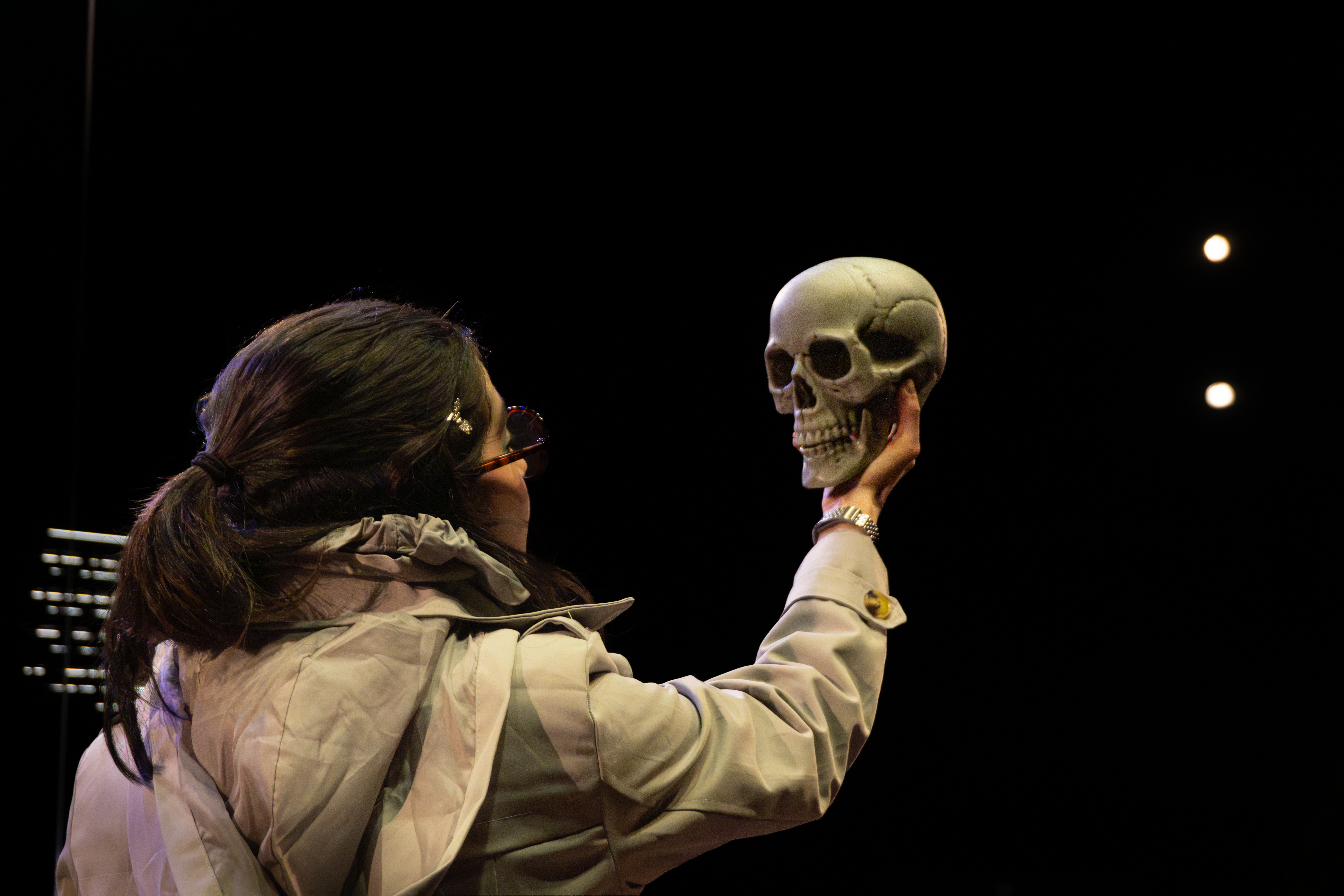
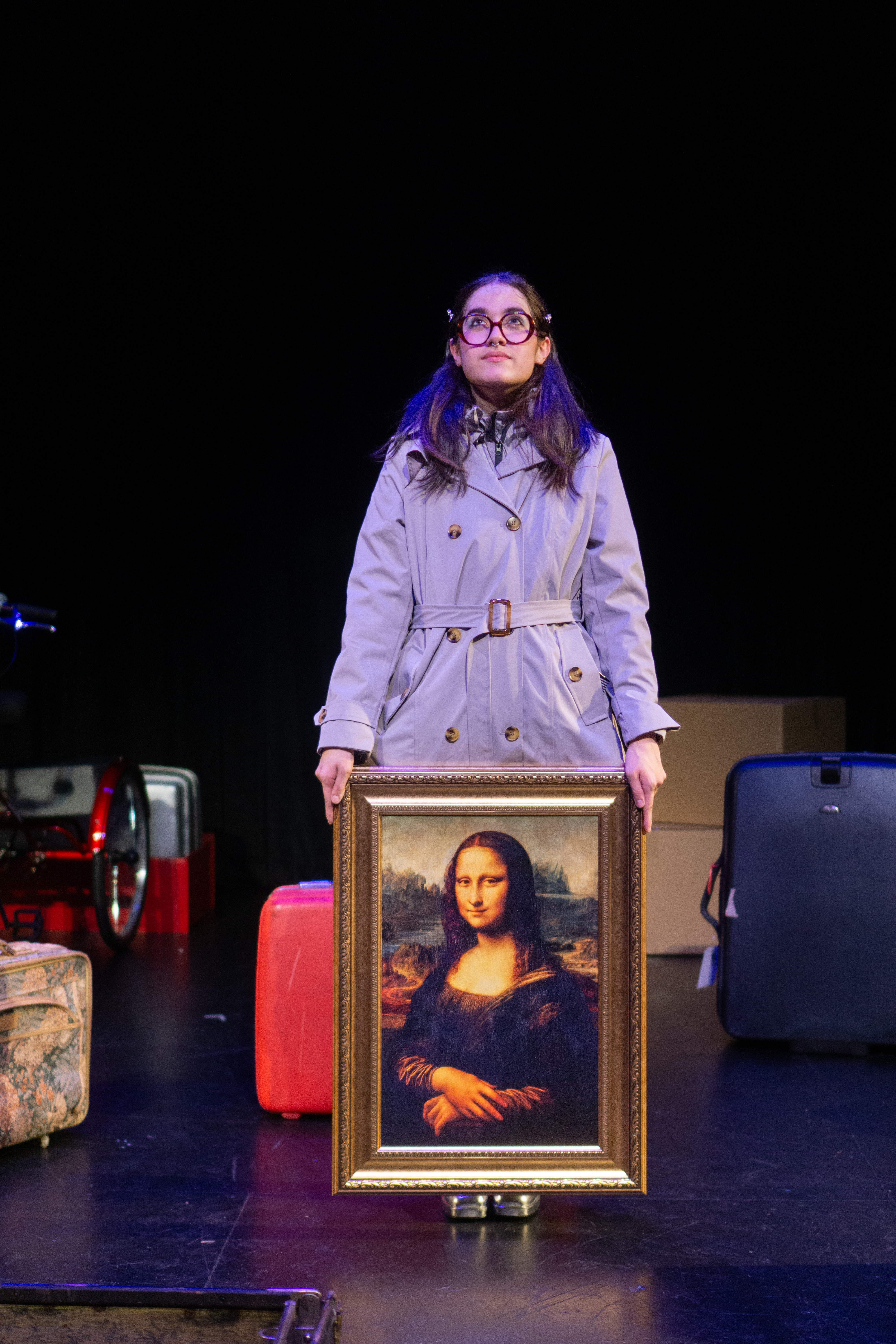
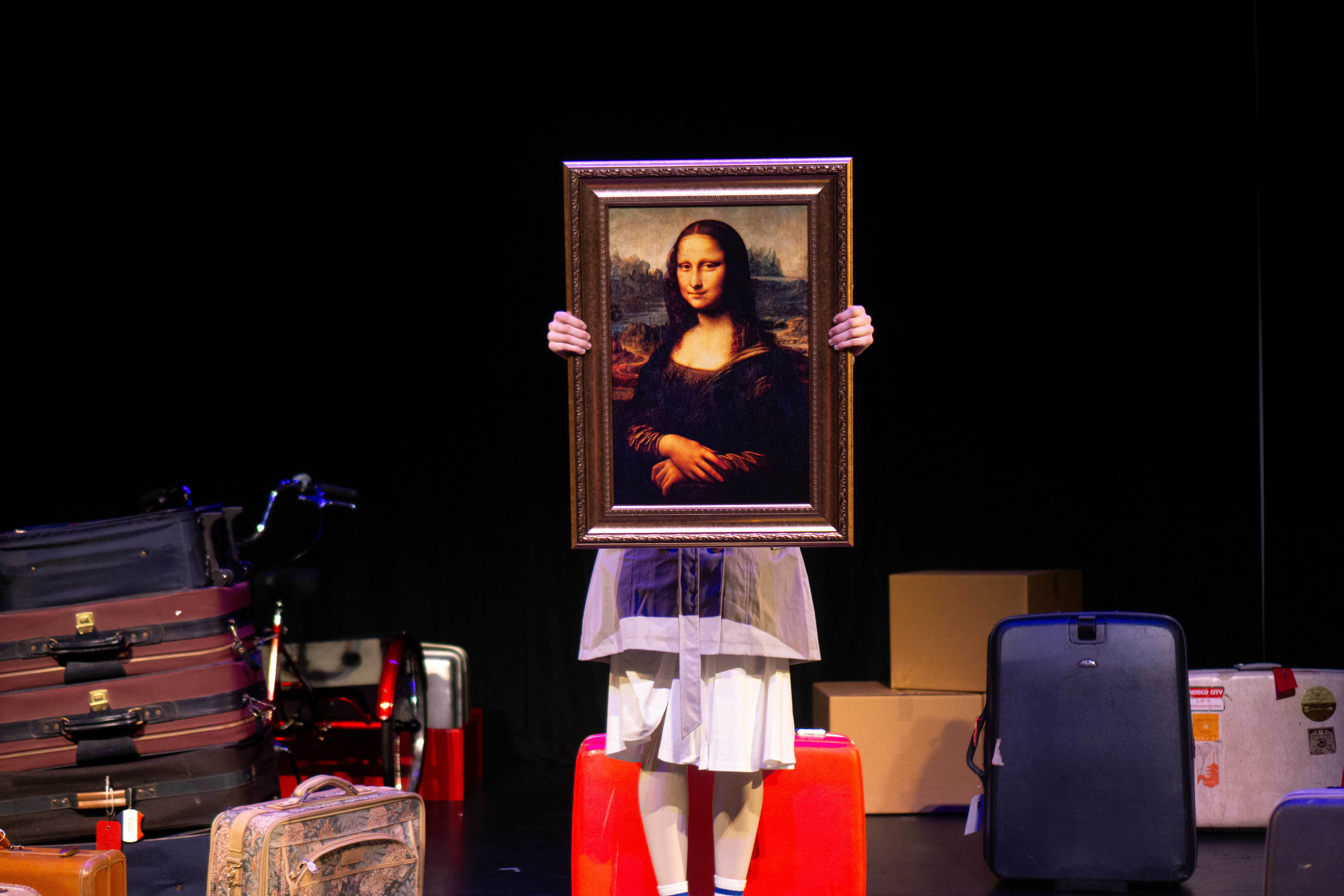
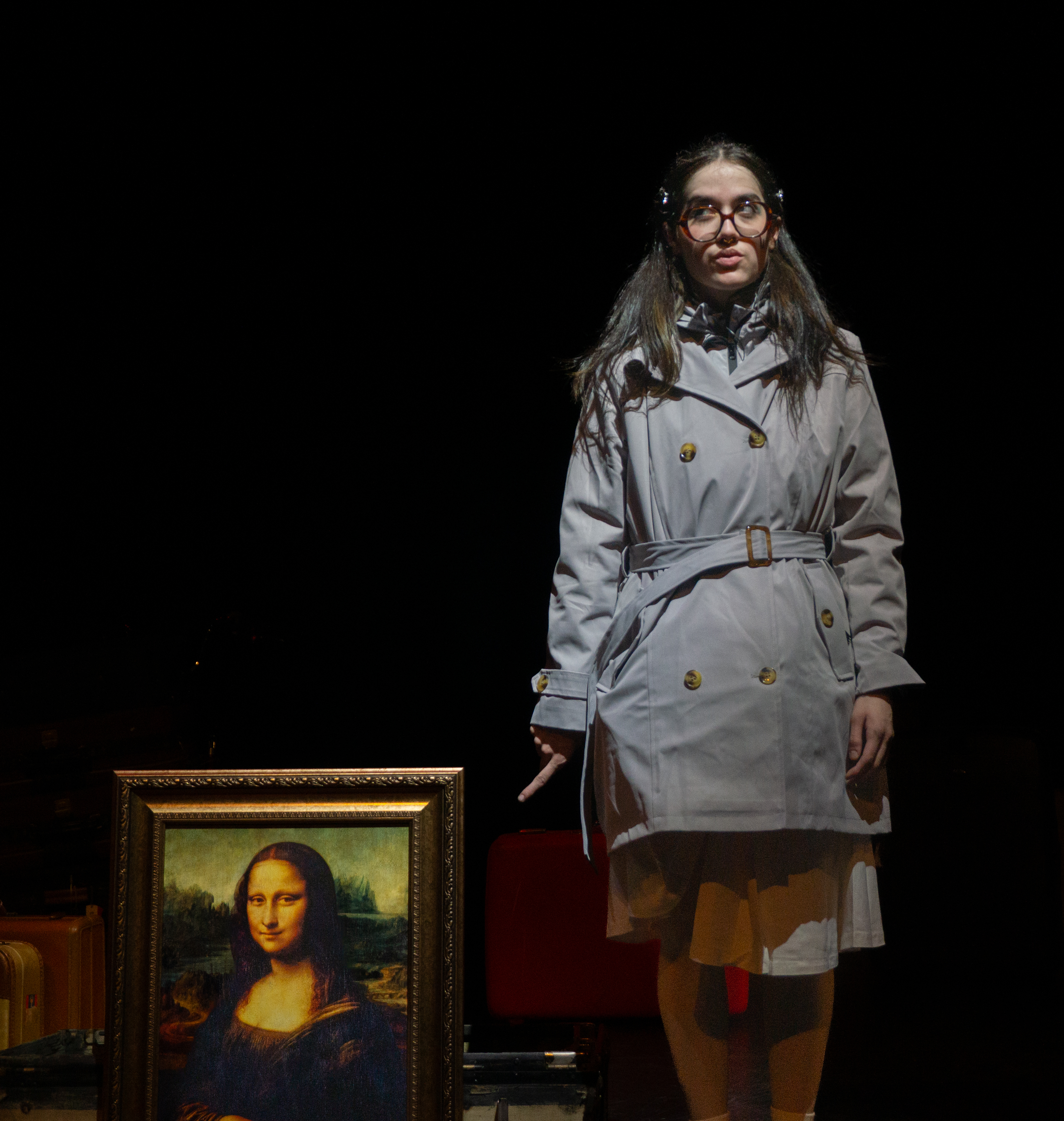
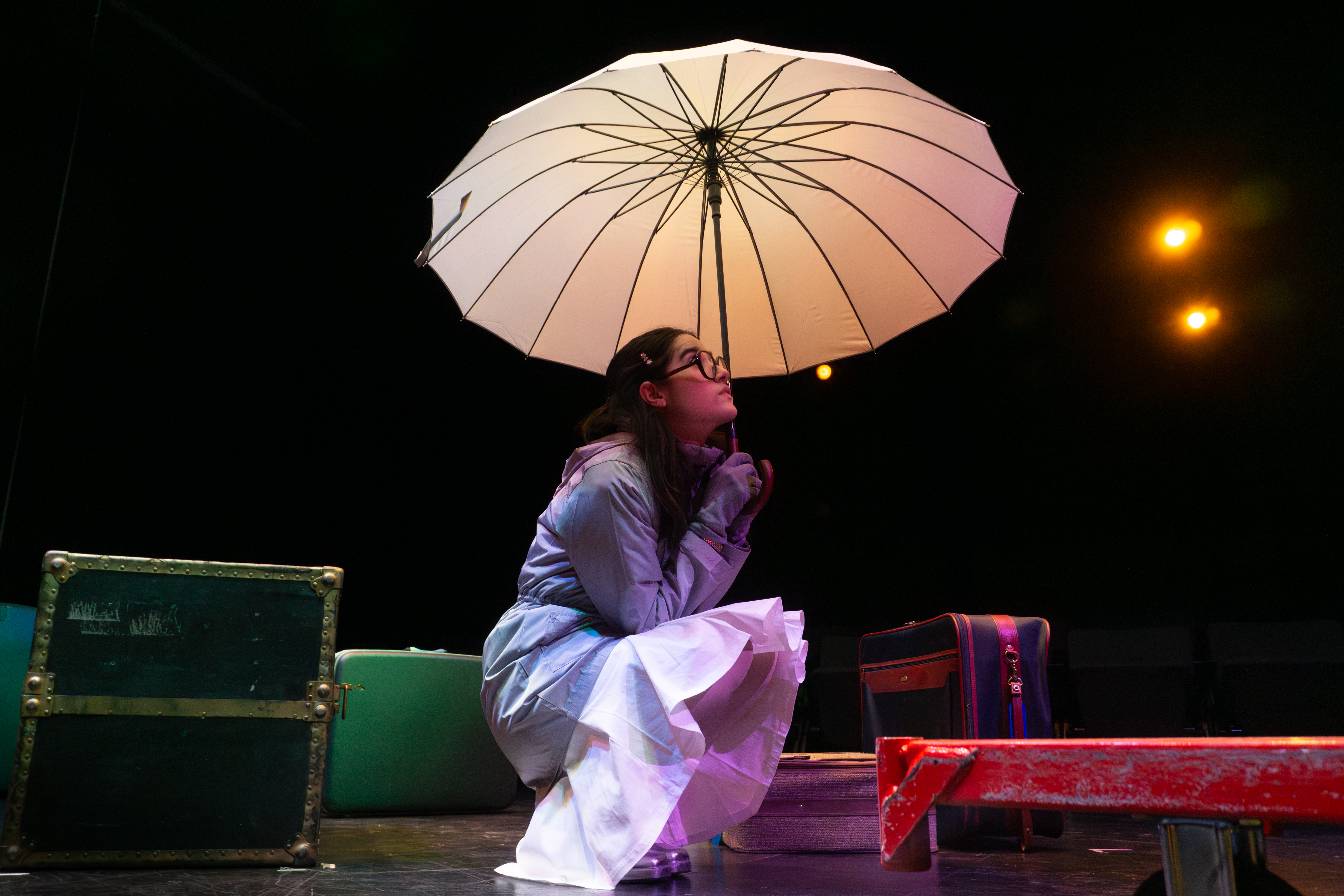
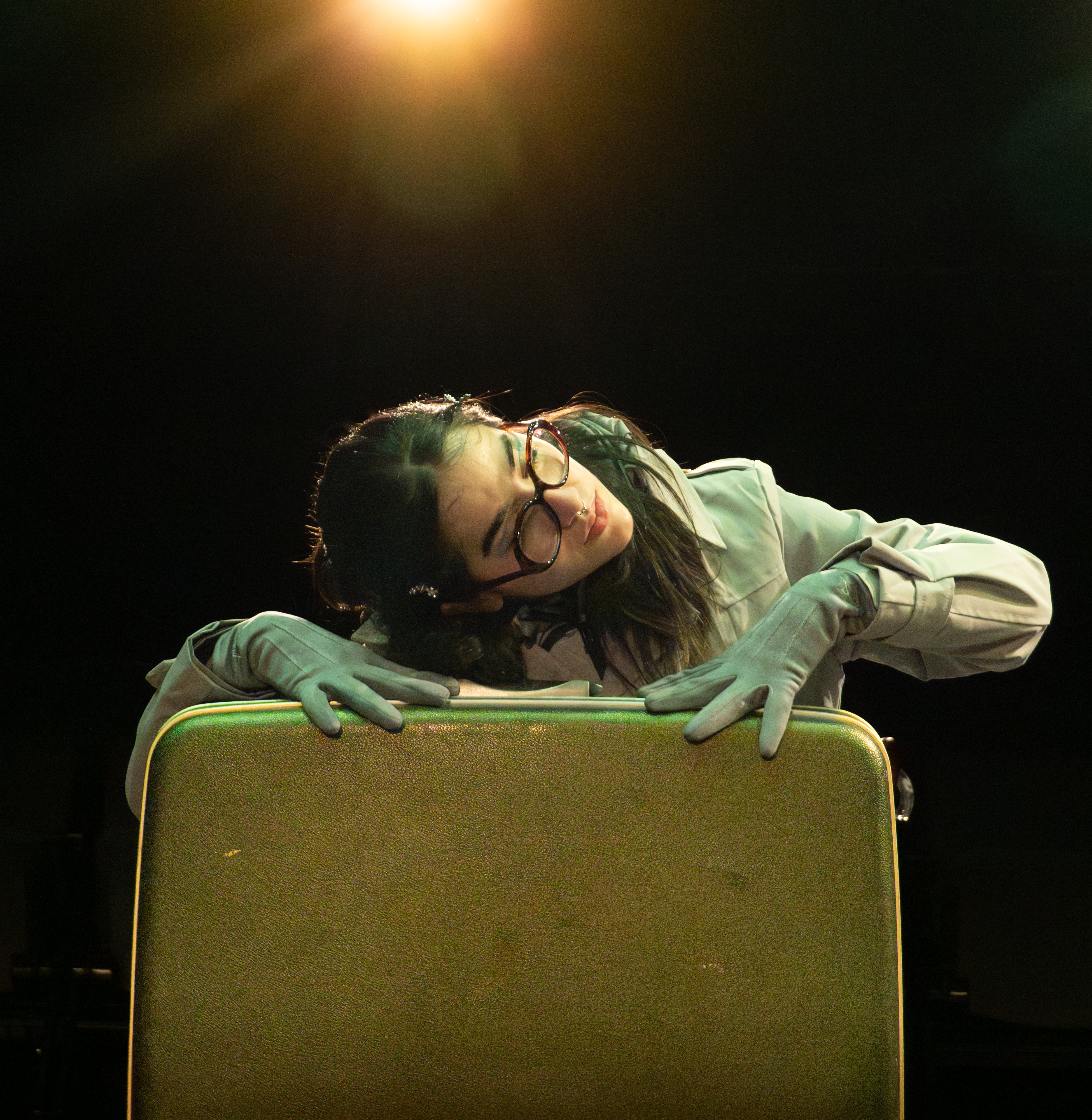
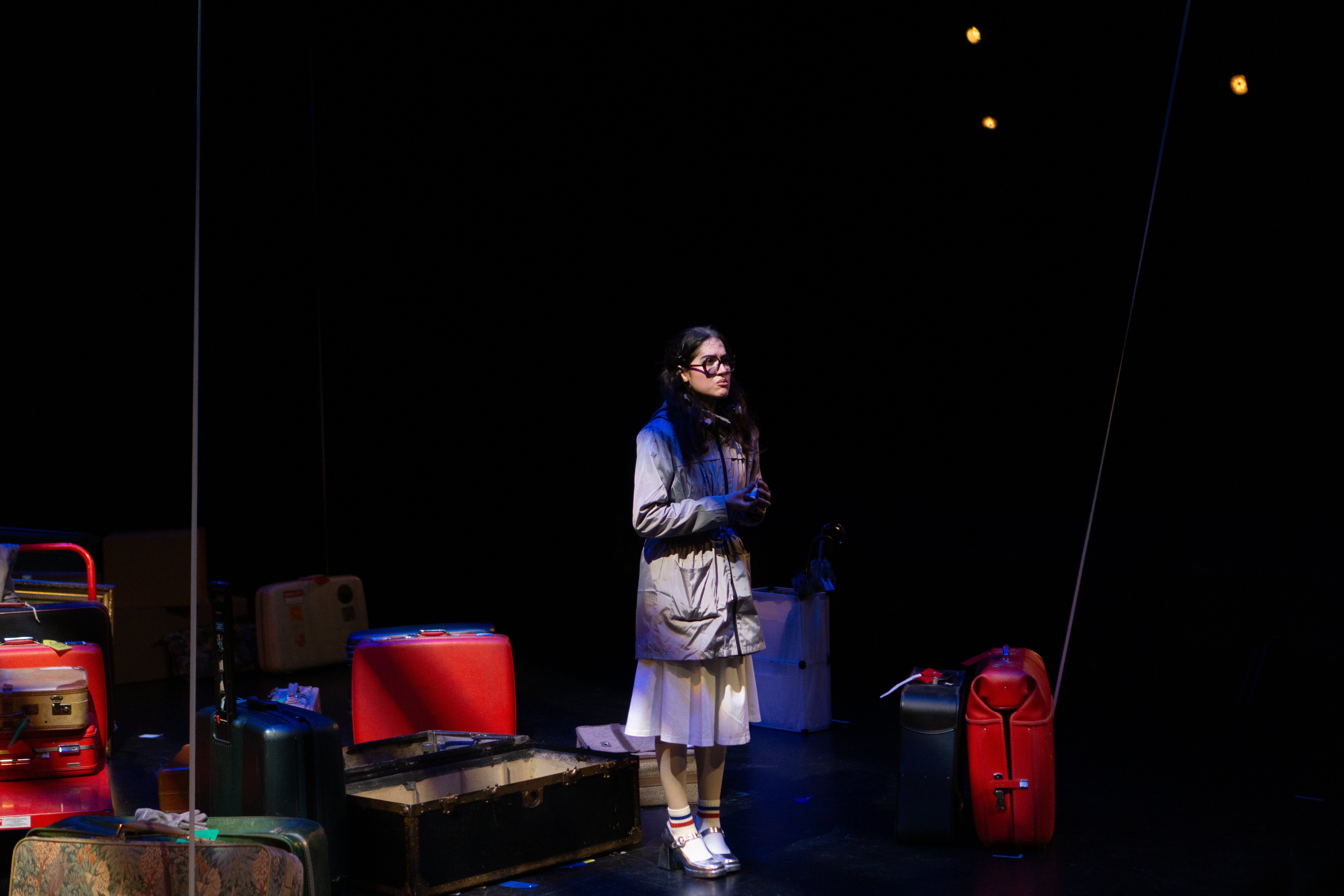
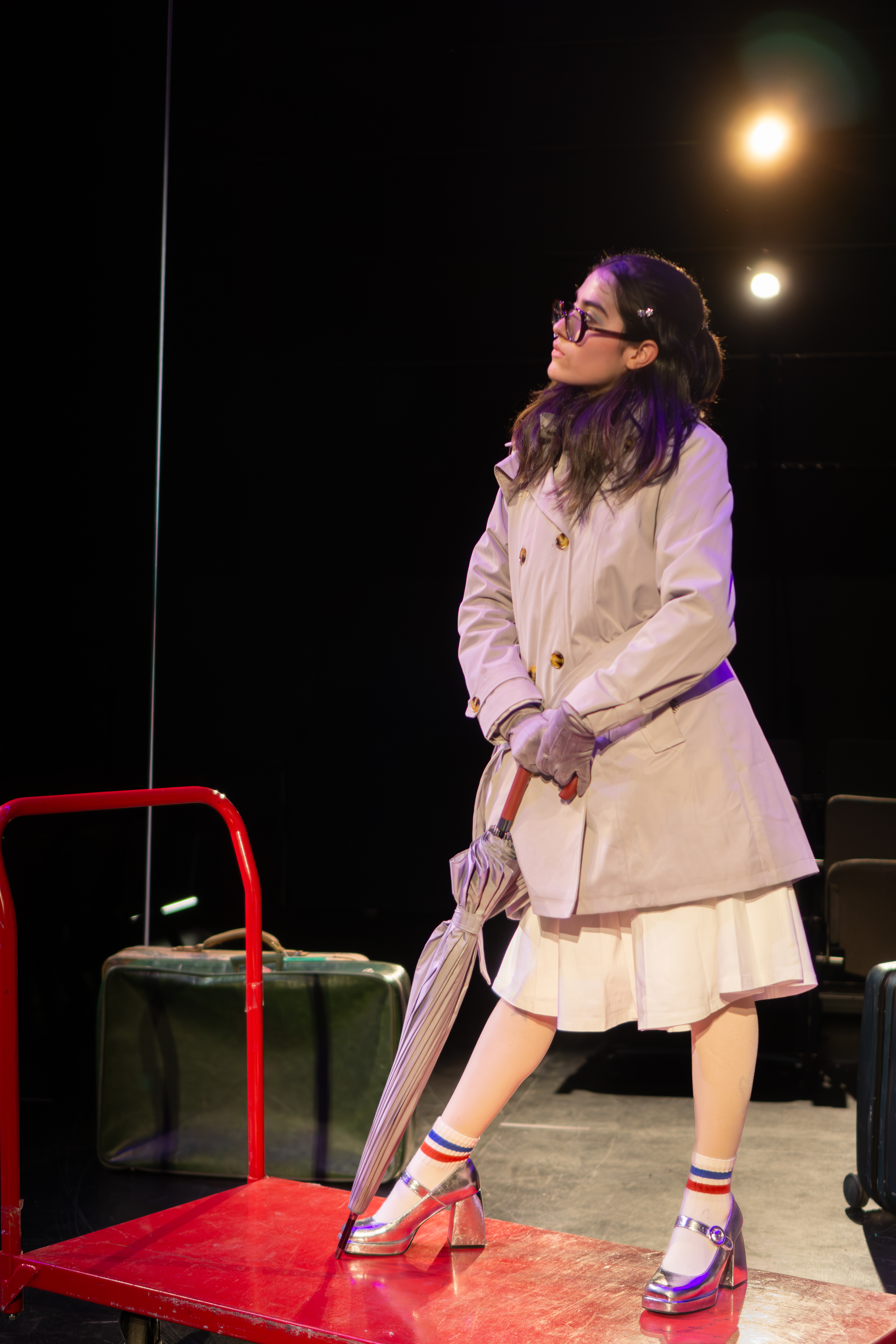
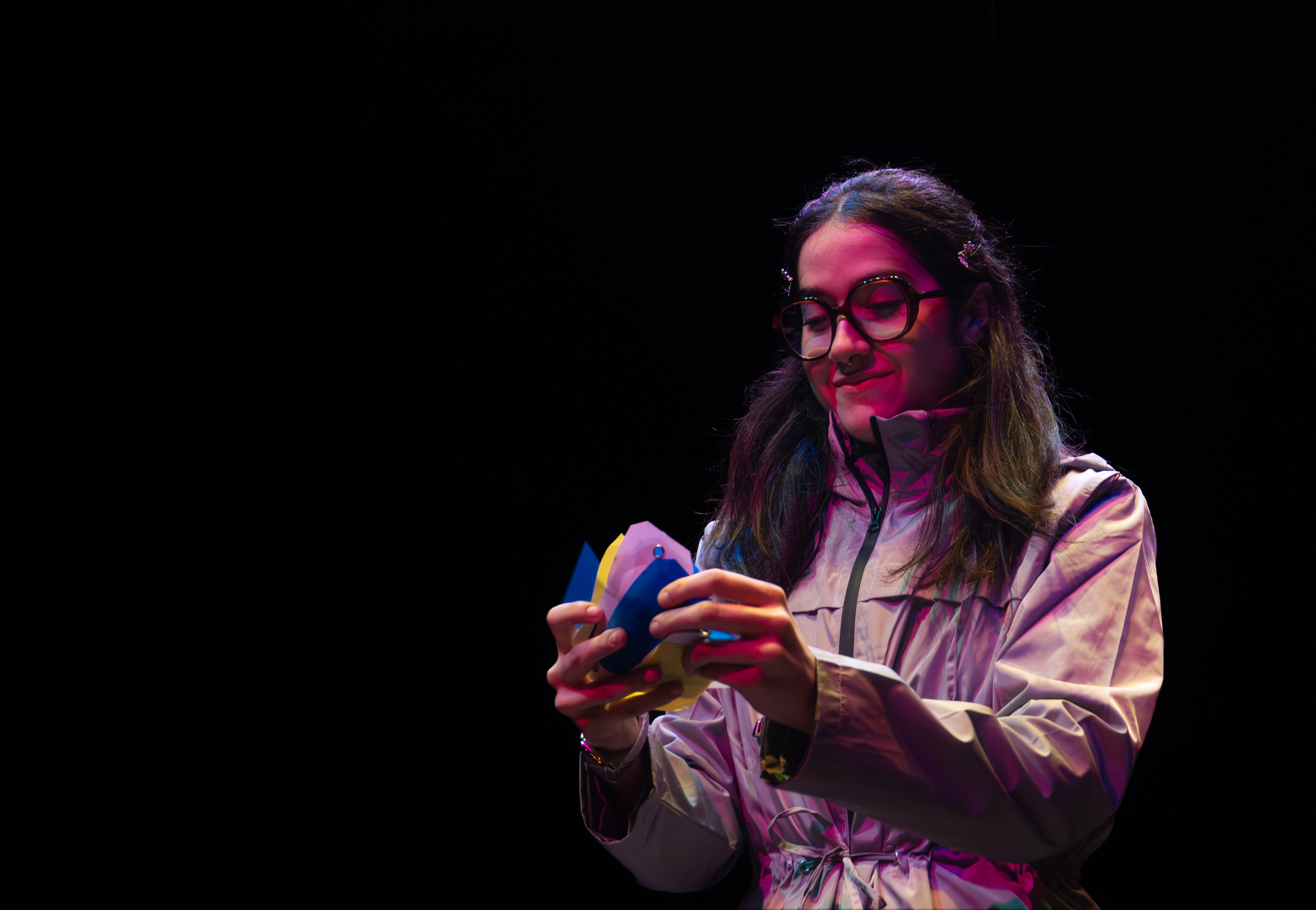
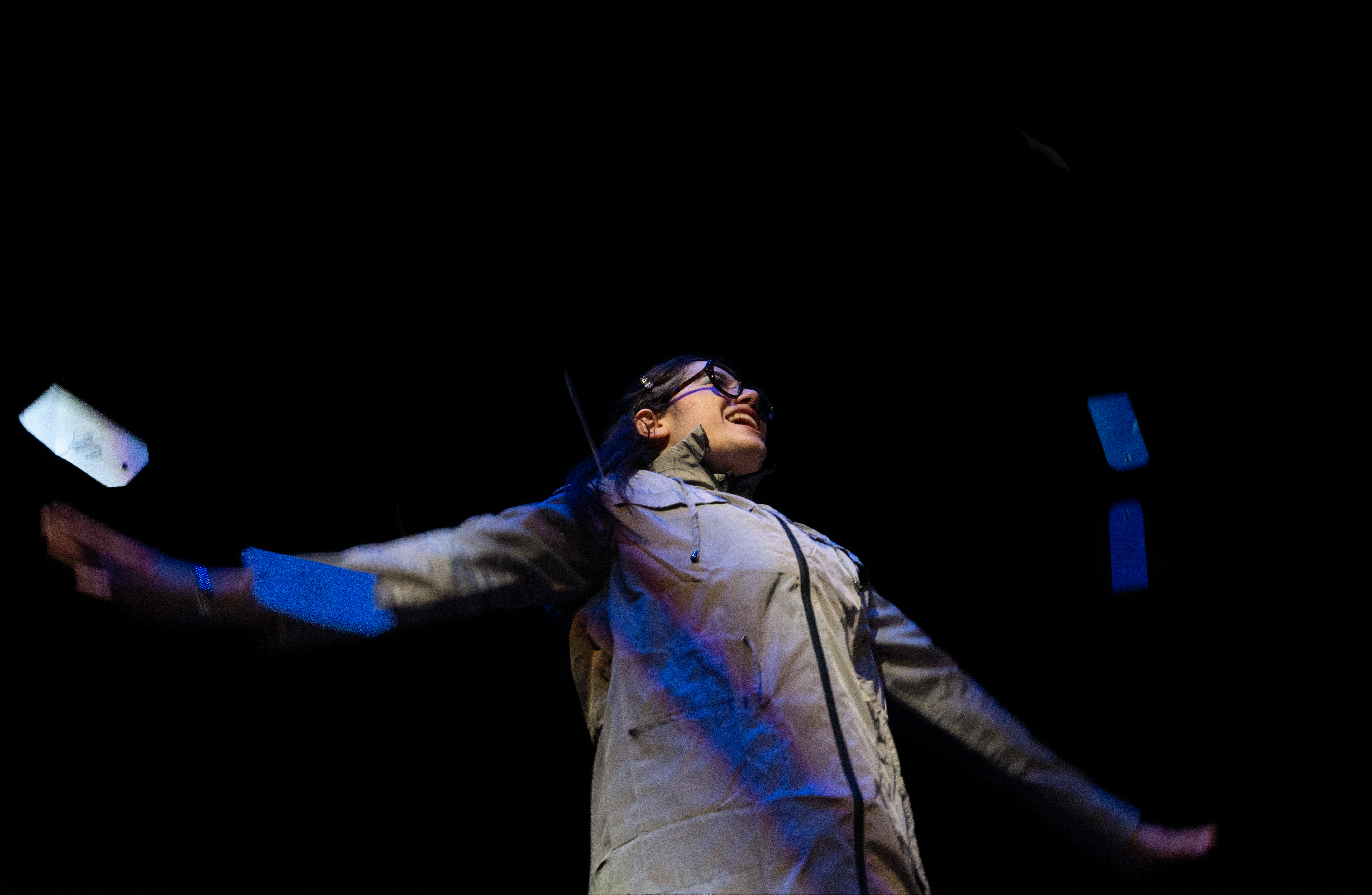
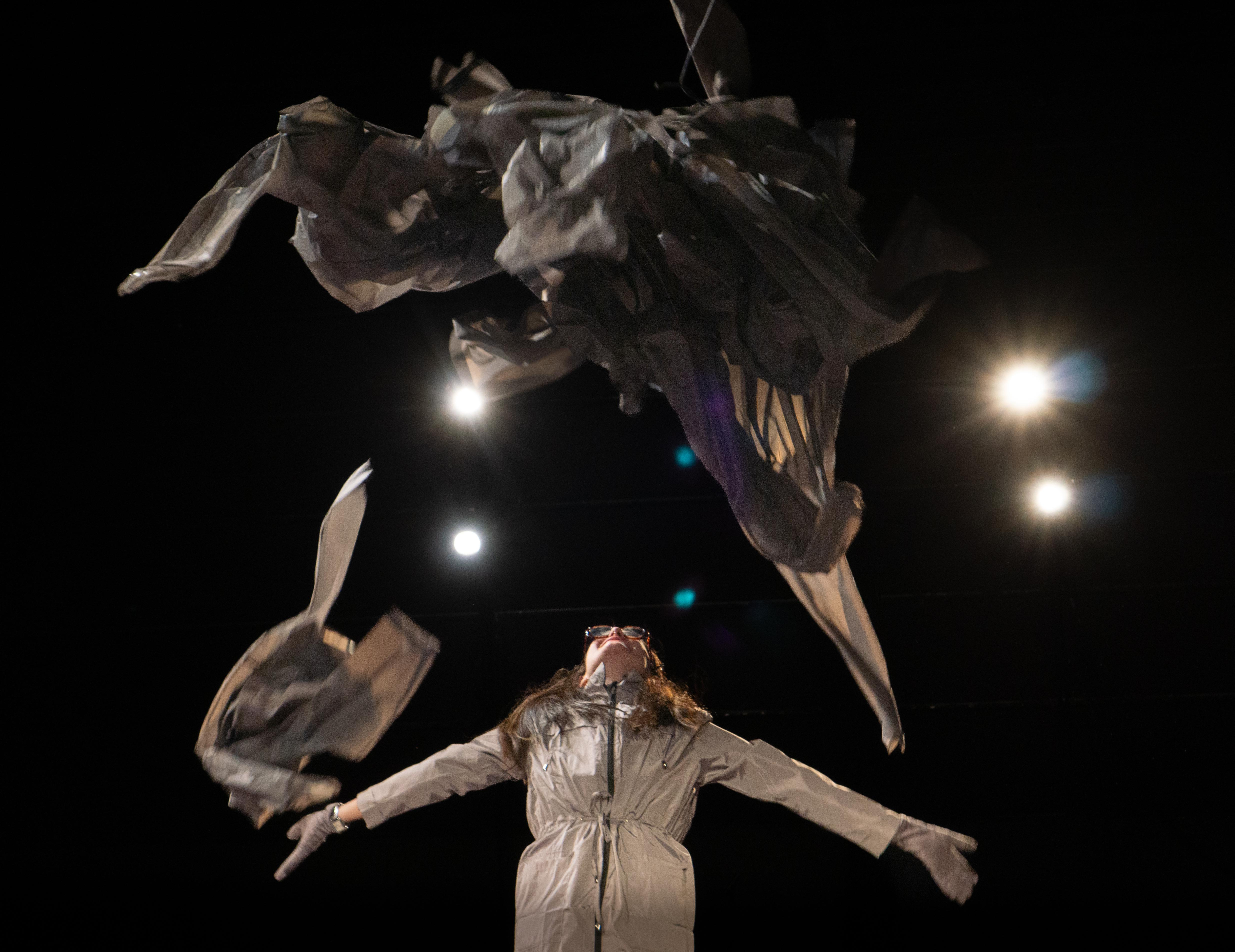
Student Reflections:
Amanda Sobrado:
It has been a few weeks since we started the rehearsal process. It has been more informative than I could have anticipated. Professor Hart and I sat down and wrote down dozens of physical actions that are described in the play. We are playing with where we are. Is she alive? Is she in jail? Is she already gone or is she leaving? Who is looking for her? During these improvisations, Professor Hart would adjust who was looking at me, who I was looking for, and what I was looking for. It’s been grounding to do these improvisations, and it forces me to find new ways to interact with the suitcases.
I have learned a lot about space and how the brain interprets trauma and pain. Professor Hart has mentioned many times that a person being tortured often feels like their body takes up the entire room. We are trying to find ways to incorporate this feeling into the show. Some of the challenges have been logistically figuring out how we make these suitcase move and feel alive.
Casalia is in a deeply liminal space. While it initially feels functional, it slowly shows itself as completely absurd.
Acting in this style is extremely different from anything I’ve done before. Latin American absurdism is a completely untouched genre for me. I typically aim to be as realist as I can, but that does not necessarily have a place in this show. What I will say though, is it is so, so much fun.
This experience has meant more to me than I could have ever imagined. The privilege to perform, to speak loud, and to give light to a group of people systemically silenced is one I did not take lightly. To see older Latinos in the audience, aside from my beautiful mother, connect with the material and feel seen was remarkable. Whether it’s a family member, classmate, artist, or spouse, older people from the southern cone have a memory of disappearance. I am grateful, and always will be, for the opportunity to bring these voices to a stage again.
Mayah Tiwari:
As the Costume and Makeup Designer for Personal Belongings, this process has strengthened me as an artist. In my opinion, one of the most successful aspects of this production has been the collaborative brainstorming with the team. I appreciated how open the room was to feedback—both giving and receiving. I never felt like I had to defend my ideas; instead, I felt like we were all building something together. Working closely with everyone has allowed me to help build a visual world that supports Amanda’s storytelling in a meaningful way– that collaborative spirit only strengthened as we fine-tuned and brought this story to more people.
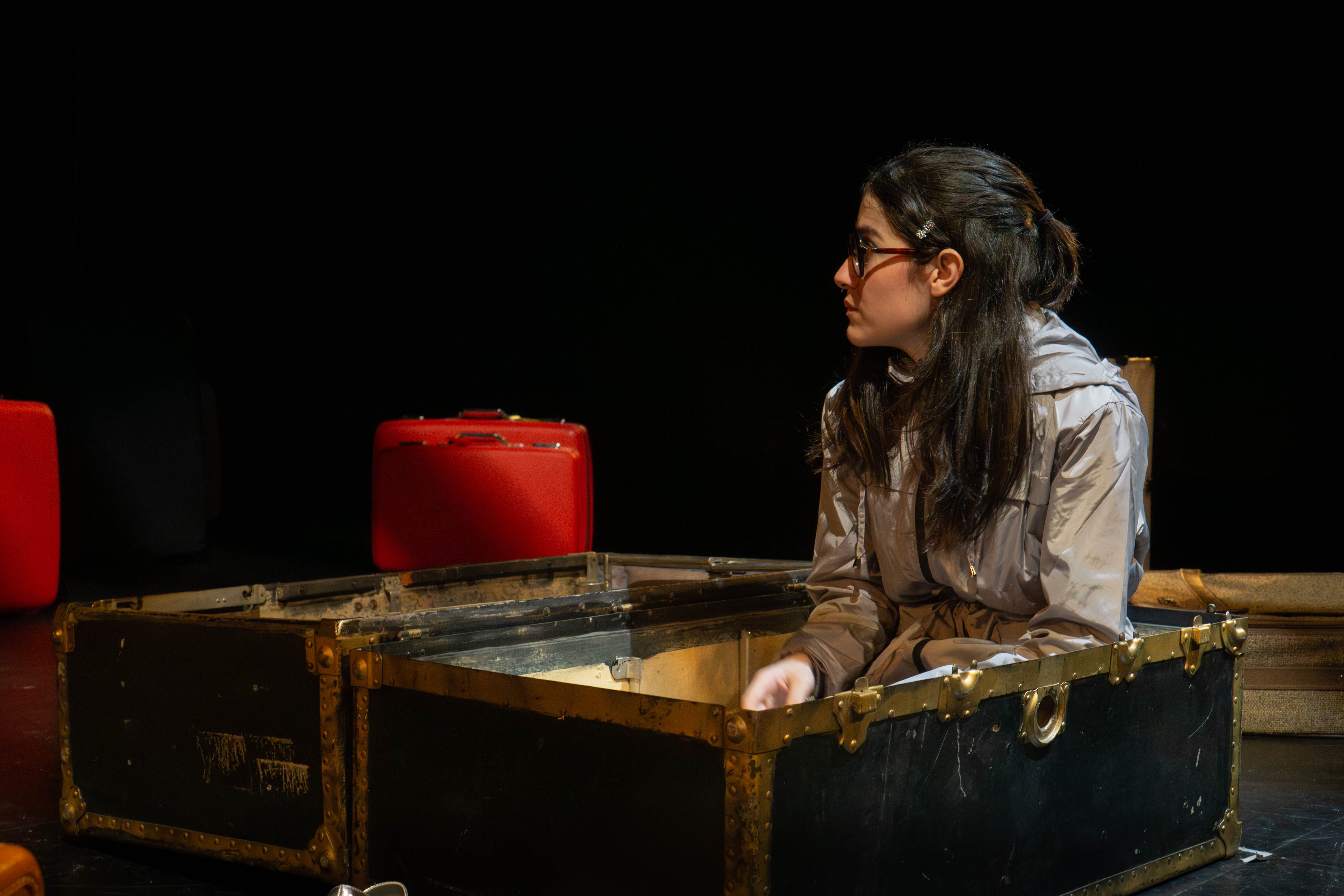
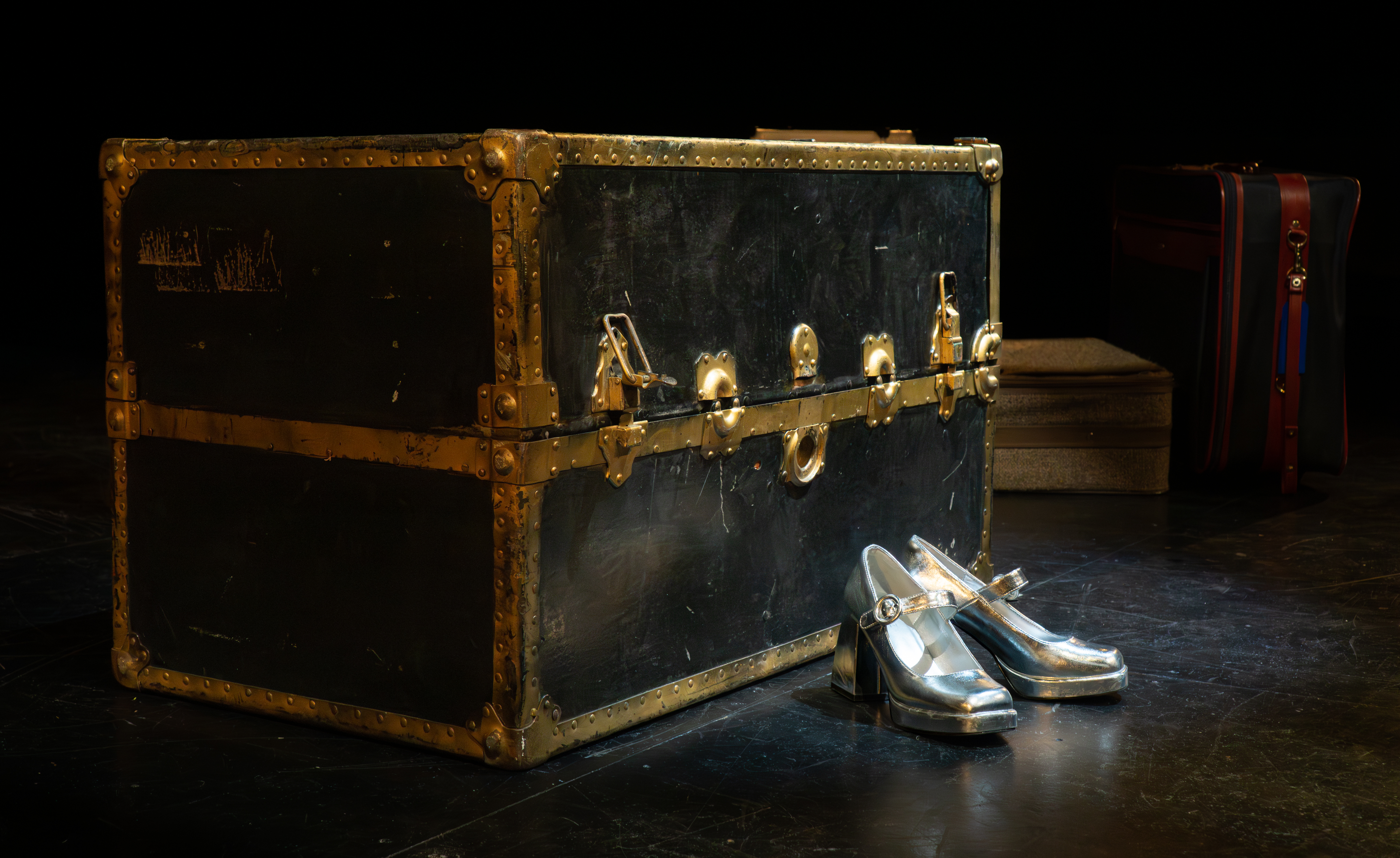
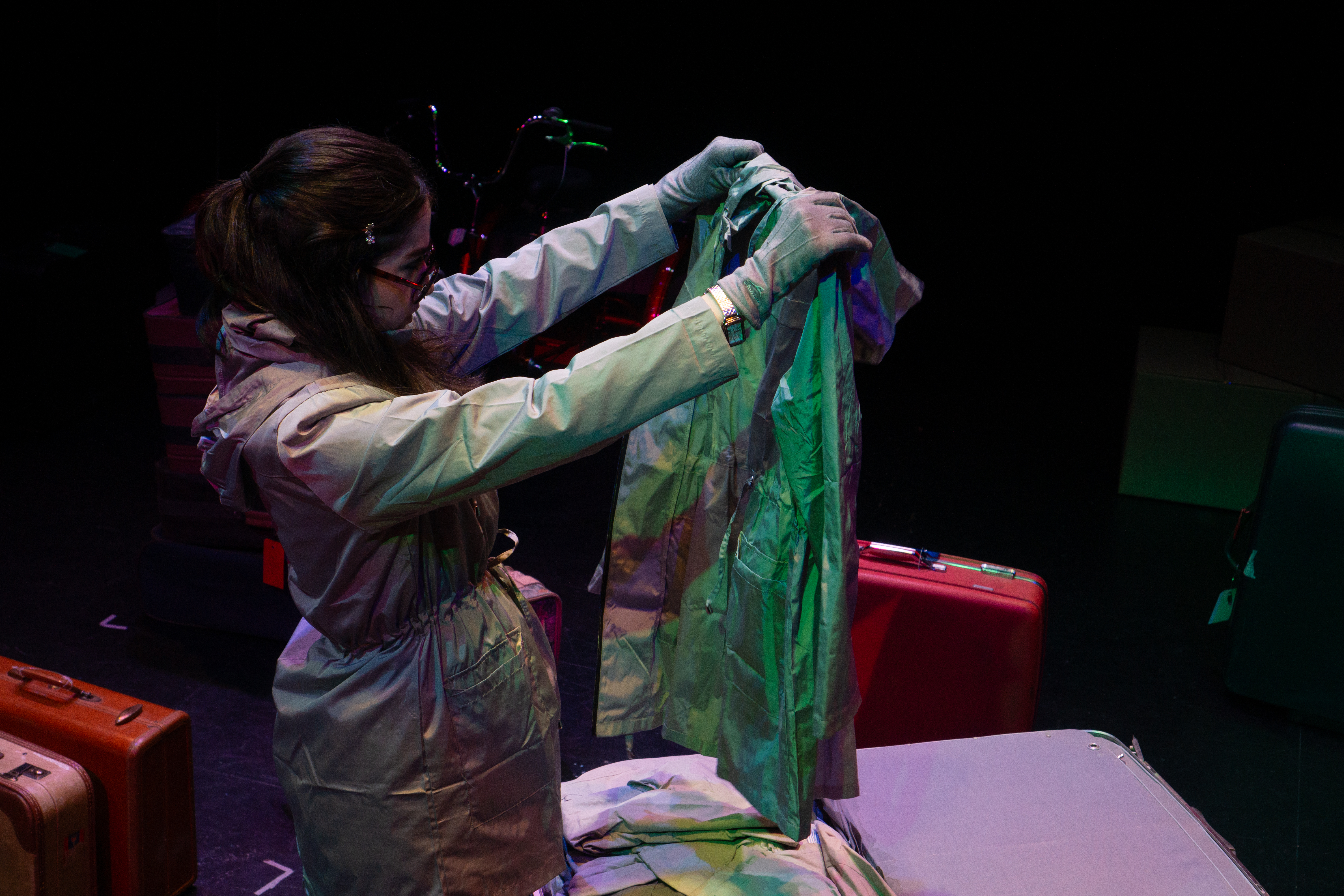
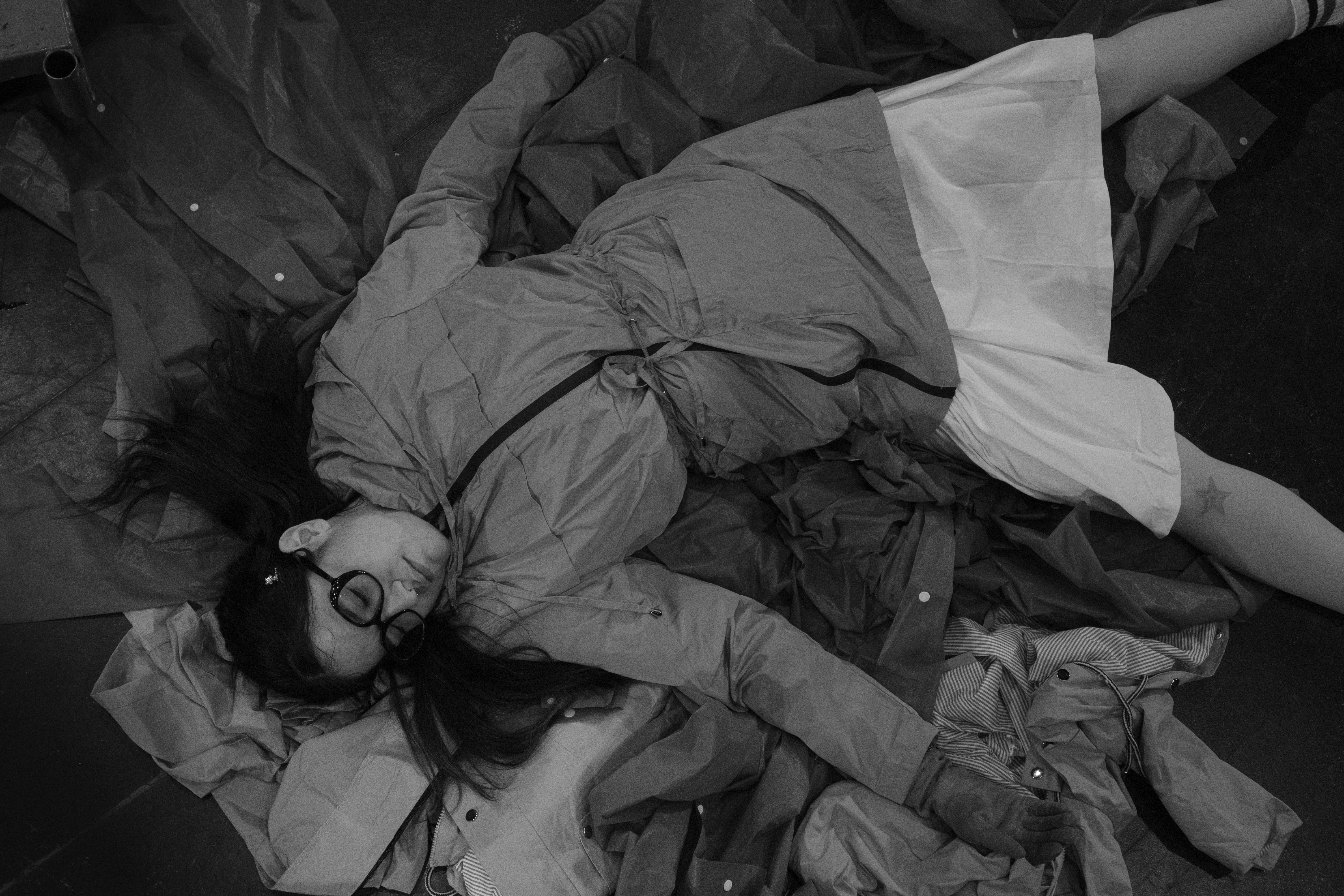
Seeing the technical elements come together made me realize how much this show relies on the interplay between object and body. The suitcases aren’t props—they’re scene partners. The raincoats aren’t costumes—they’re plot points. I kept thinking about the final moment when Casalia climbs into the suitcase and becomes “un bulto más.” That image guided my final design choices. Her look needed to feel like it could collapse into anonymity at any moment. Glamour that can be folded. Identity that can be zipped shut.
I realized that designing for this show wasn’t about creating a “final look,” but about creating a system—something durable, flexible, and emotionally legible. The room taught me that design is choreography too.
I’m particularly proud of the small but meaningful details I incorporated into Amanda’s look. From the beginning, I knew I wanted to incorporate the blue and yellow eyeshadow to mirror the Argentine flag, and find something to represent the countries Amanda’s families are from. This ended up being the blue and red striped socks referencing the Costa Rican and Chilean flags. These choices supported the show’s themes of identity and aligned with my goal of grounding designs in a lived cultural context.
Matthew Squadrito:
Out of all the work I’ve done for this show, the single part I’m most proud of is the microphone in the trunk. I really like the effect the trunk has on Amanda’s voice. The muffled echo really helps to convey the hopelessness of the character’s situation, especially since it contrasts so much with her energy at the start of the show. And on a purely practical level, it allows Amanda to be heard in the trunk, which wasn’t possible before.
There’s also something to be said for the symbolic aspect of the set up, allowing her to be heard despite an attempt at repression. An analogy could be drawn between her character and the Argentinian theater community at large, as both have suffered oppression while attempting to share their art with the world. The Jean Graham Jones reading (‘Common-Sense Catchword’: The applications of Censura to Argentinian Theatre and Performance) helped me understand just how aggressive a hold this censorship had in the country at this period. If the regime can intimidate people to the point where they censor themselves, then half their job is already done for them.
The collaborative method of putting this show together is much more interesting than many show’s I’ve worked on in the past, and I appreciate the opportunity to contribute more than the sound design aspect. This show has encouraged me to take a class in South American history next semester!
Program:
Accessibility:

